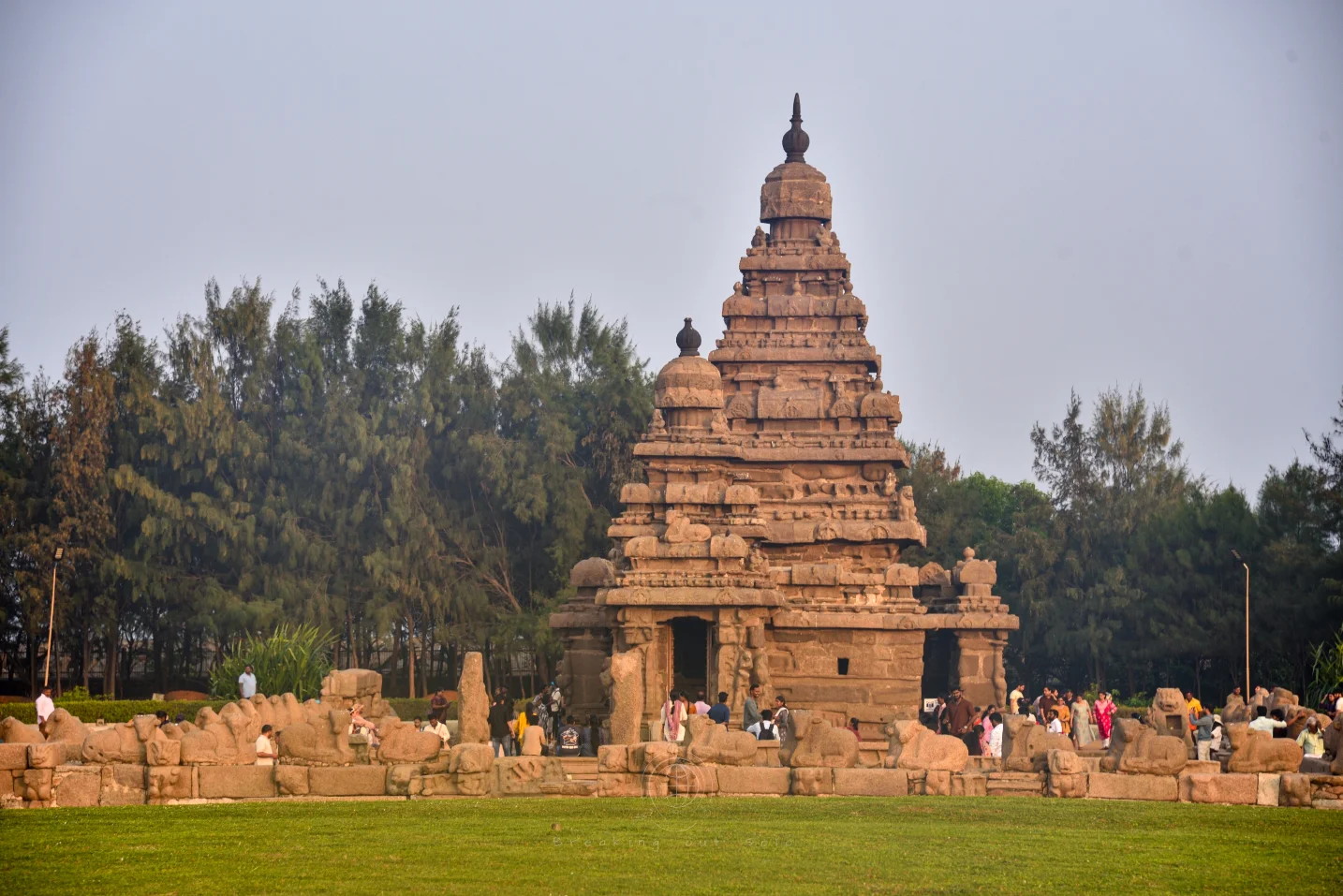
At the heart of the summit was a remarkable announcement: 127 Memoranda of Understanding were signed, representing investments worth ₹22,794 crore. These agreements span a wide range of sectors within tourism, including luxury hospitality, amusement parks, heritage experiences, wellness retreats, and large-scale infrastructure projects. The scale of investment alone reflects the growing confidence of both domestic and international stakeholders in Tamil Nadu’s tourism potential, while also highlighting the State’s proactive approach to attracting global capital. These projects are expected to generate over 65,000 jobs, underscoring tourism’s role not just as a cultural industry, but as a powerful economic engine capable of transforming livelihoods across regions. What makes this development particularly significant is the way Tamil Nadu is redefining tourism as a multidimensional strategy rather than a standalone sector. The State government has clearly positioned tourism as a bridge between culture, economy, and global outreach. By integrating heritage conservation with modern infrastructure and sustainable practices, Tamil Nadu is crafting a narrative that resonates with international travellers and investors alike. The emphasis is not simply on increasing tourist numbers, but on creating a holistic ecosystem where experiences, culture, and economic opportunity coexist seamlessly. Mahabalipuram, the summit’s host city, itself stands as a symbol of this vision.
With its UNESCO-recognised monuments, ancient rock-cut temples, and coastal charm, it has long been a point of global cultural interest. The decision to further develop this region through a Special Area Development Authority, backed by an investment of ₹100 crore, signals a commitment to elevating such heritage sites into world-class tourism hubs. This move reflects a broader strategy—one that recognises the importance of leveraging historically significant locations to attract global audiences while ensuring that development remains sensitive to cultural authenticity.
Beyond Mahabalipuram, the State has identified 31 locations for tourism-led development, spreading opportunities across diverse geographies. Four districts—Kanniyakumari, Kallakurichi, Erode, and Thoothukudi—have been earmarked as special tourism destinations, inviting large-scale investments that will bring both visibility and infrastructure to these regions. This decentralised approach is particularly noteworthy, as it aligns with Tamil Nadu’s larger economic philosophy of distributed growth. Instead of concentrating development in a few urban centres, the State is using tourism as a tool to create balanced regional progress, ensuring that benefits reach smaller towns and emerging destinations. The summit also revealed how Tamil Nadu is aligning itself with global tourism trends. Conversations during the event highlighted the increasing role of technology, sustainability, and experiential travel in shaping the future of the industry. Industry leaders and experts discussed how artificial intelligence, digital platforms, and immersive technologies are transforming the way travellers discover, plan, and experience destinations. This reflects a clear understanding that global tourism today is driven as much by innovation as it is by infrastructure, and Tamil Nadu appears ready to embrace this shift.
Equally important was the focus on niche tourism segments that cater to evolving global preferences. Coastal and adventure tourism emerged as key areas of interest, with discussions around safety standards, certification systems, and long-term governance. The State’s extensive coastline offers immense potential for activities such as surfing, diving, and water sports, and the presence of international experts at the summit indicates a willingness to adopt global best practices. This is a crucial step in ensuring that Tamil Nadu’s tourism offerings meet international standards, thereby enhancing its appeal to global travellers.
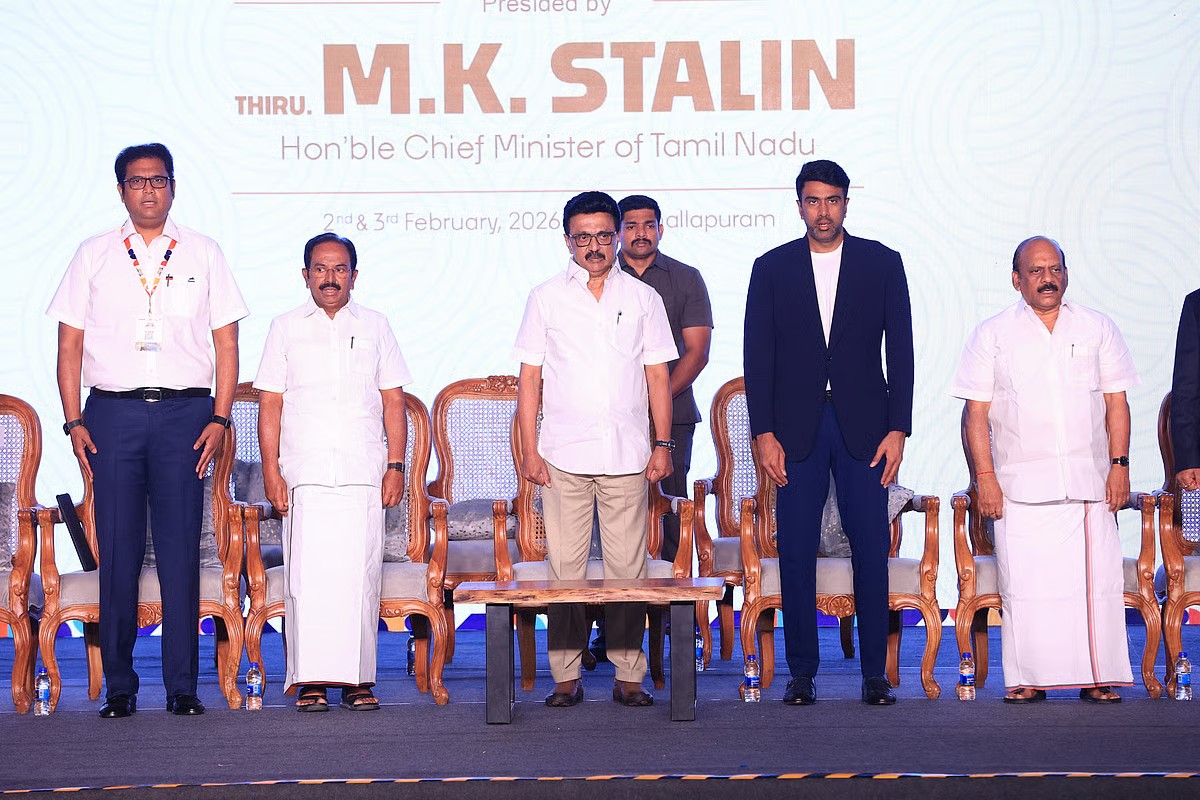
Chief Minister M. K. Stalin at the Tamil Nadu Global Tourism Summit 2026
Sports tourism was another area that received considerable attention, reflecting a growing global trend where sporting events and activities become major travel drivers. The discussions explored how leagues, tournaments, and athlete-led ecosystems can create year-round engagement, attracting visitors beyond traditional peak seasons. By integrating sports into its tourism strategy, Tamil Nadu is tapping into a dynamic and rapidly expanding segment of the global travel market.
Heritage, however, remains at the core of Tamil Nadu’s global identity, and the summit reinforced this by emphasising innovative ways to present cultural experiences. Experts explored how heritage can be made accessible and engaging for younger audiences without compromising authenticity. This is particularly relevant in an era where travellers seek immersive and meaningful experiences rather than passive sightseeing. By reimagining heritage through storytelling, curated experiences, and interactive formats, Tamil Nadu is positioning itself as a destination that offers depth as well as diversity.
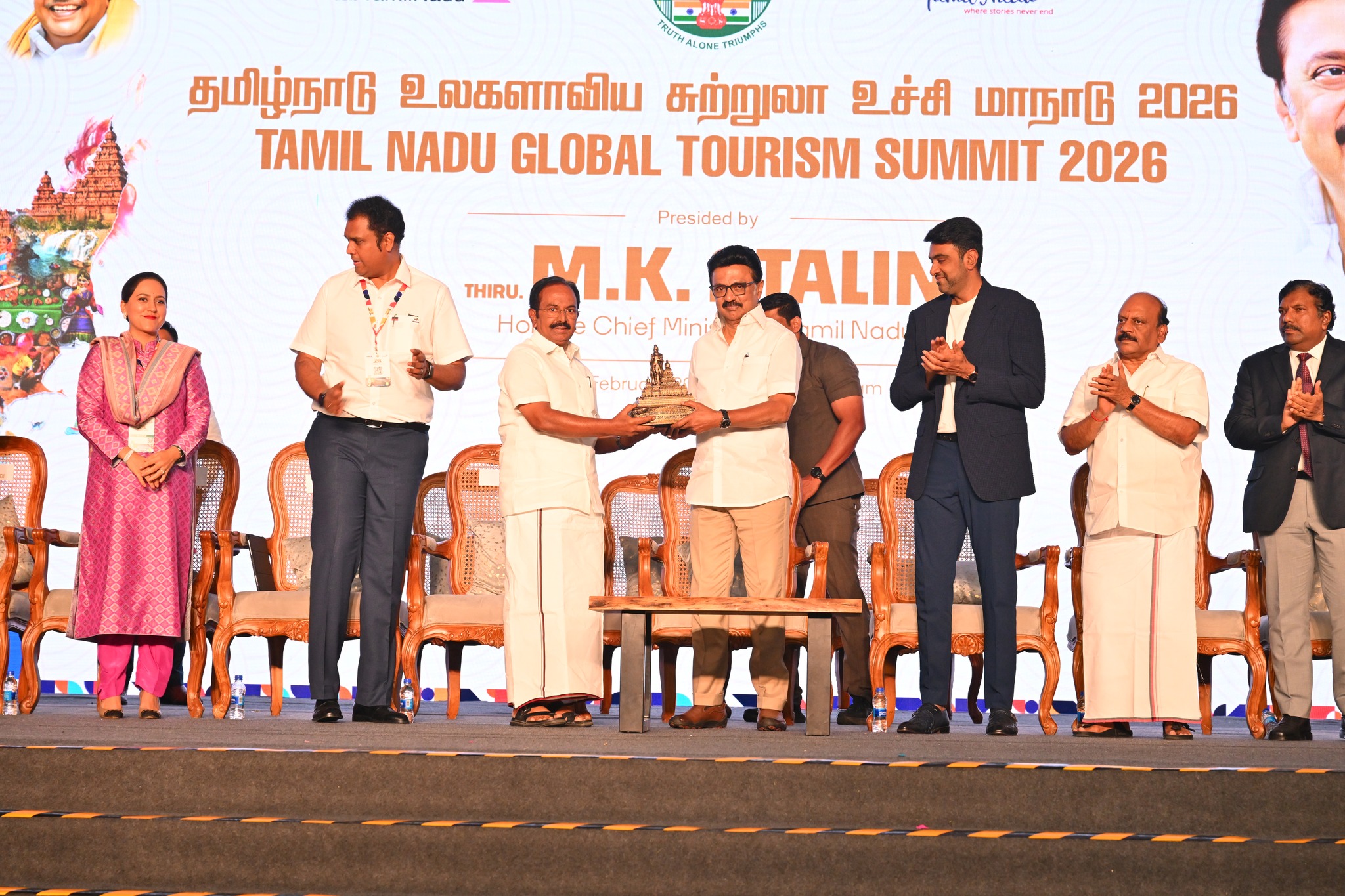
Memoranda of understanding signed at the summit
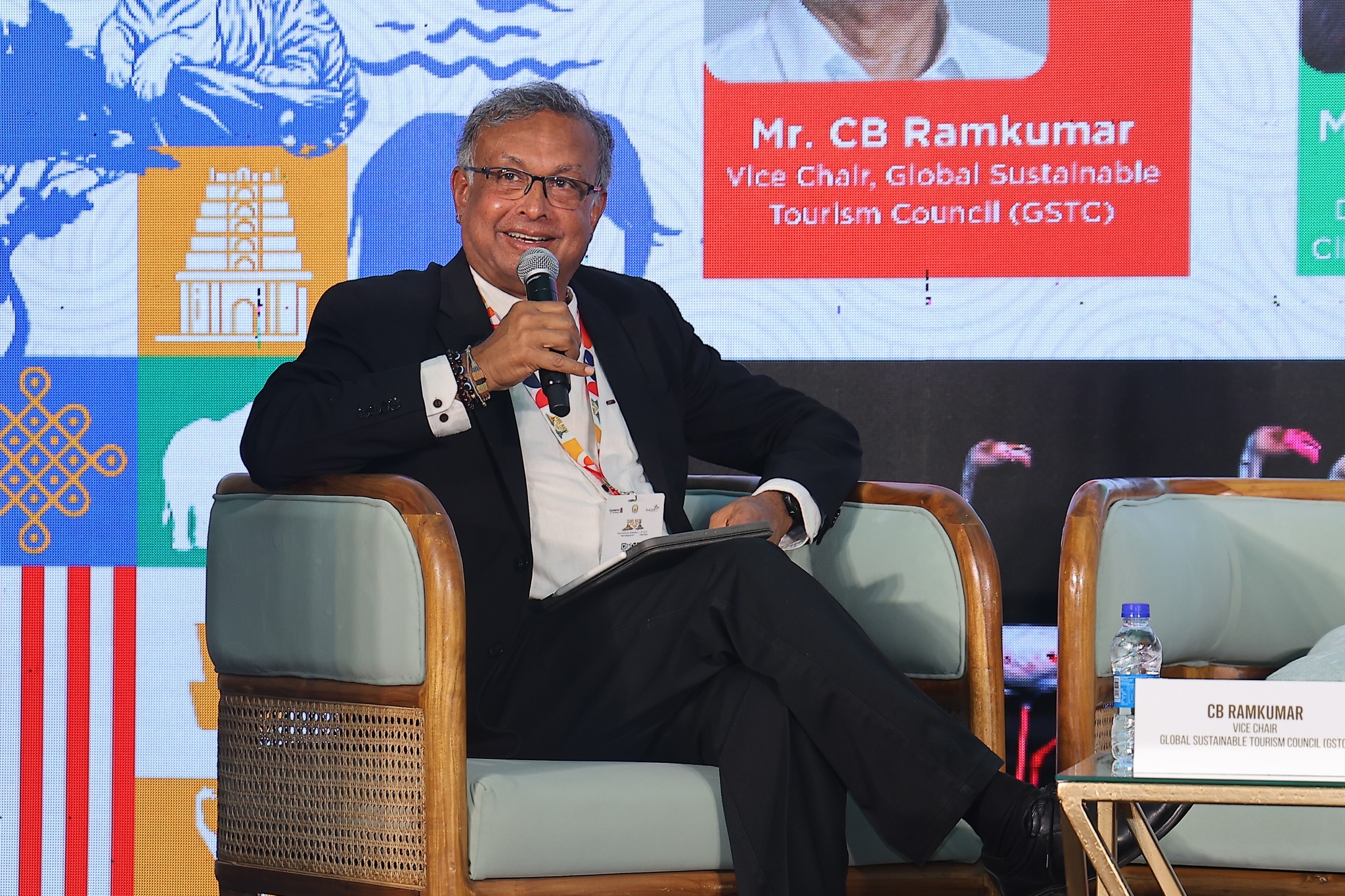
Mr. C. B. Ramkumar, Vice-Chair of the Global Sustainable Tourism Council, on stage
Another defining theme of the summit was sustainability, which has become a central pillar of global tourism discourse. Tamil Nadu’s approach reflects a conscious effort to align growth with environmental responsibility. Eco-tourism, wellness tourism, and responsible travel practices were discussed as integral components of the State’s strategy. The emphasis on wellness tourism, in particular, highlights Tamil Nadu’s natural strengths, including its rich traditions of Siddha medicine, Ayurveda, and holistic healing practices. These offerings have significant global appeal, especially in a world increasingly focused on health and well-being.
Food culture also emerged as a powerful tool of global engagement. Tamil Nadu’s cuisine, with its diverse flavours and deep-rooted traditions, has long been a point of cultural pride. The discussions at the summit explored how global travel is influencing regional cuisines and how local food can be positioned as a key attraction. By promoting its culinary heritage on an international platform, Tamil Nadu is not only enhancing its tourism appeal but also strengthening its cultural diplomacy.
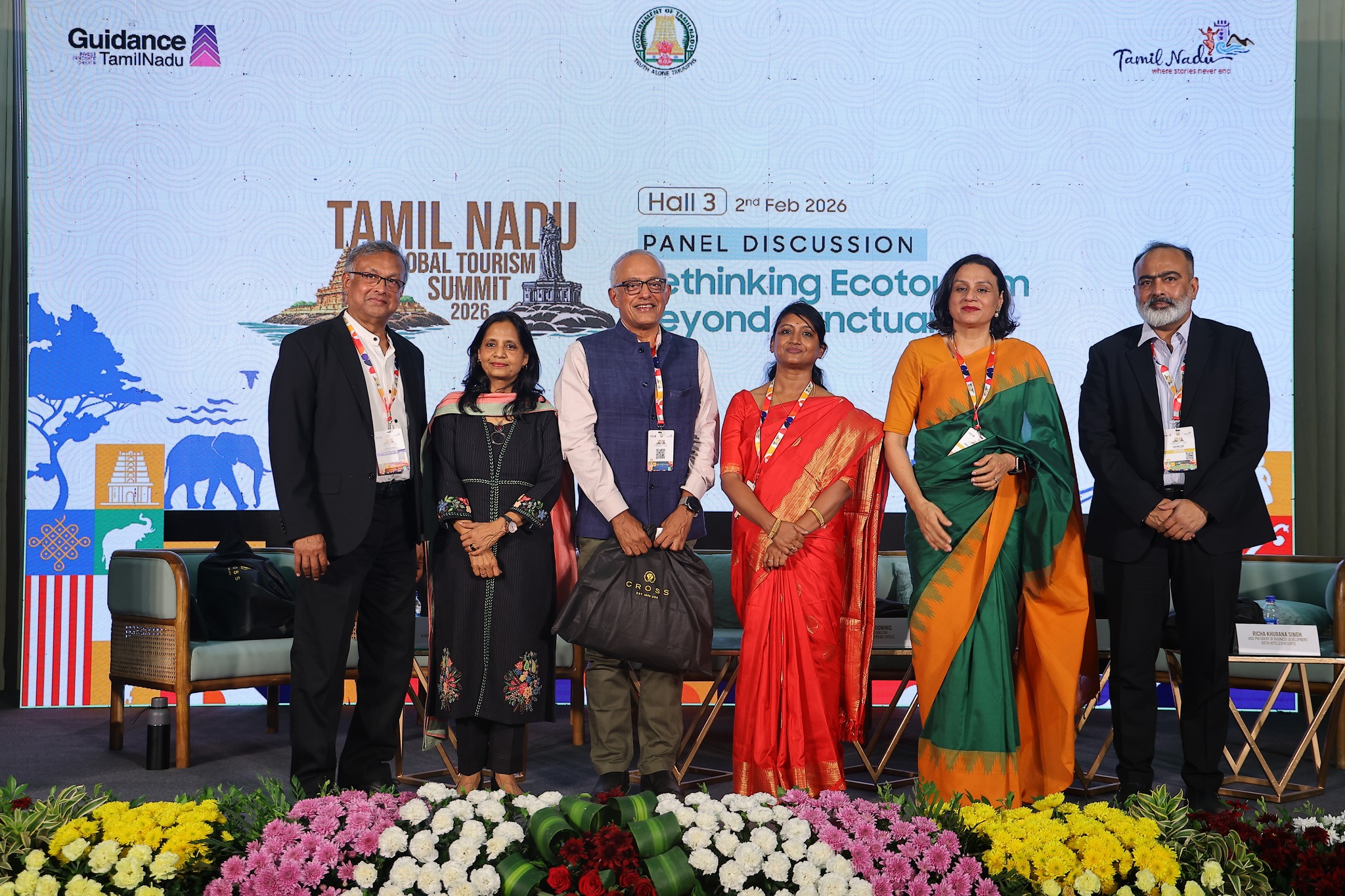
A panel on rethinking ecotourism
The broader economic implications of these developments cannot be overstated. Tourism, as highlighted during the summit, plays a critical role in balancing Tamil Nadu’s economic structure, which includes manufacturing, services, and primary sectors. By creating opportunities across these domains, tourism contributes to a more inclusive and resilient economy. The State’s high level of urbanisation, combined with its focus on regional distribution, makes tourism an ideal sector to drive sustainable growth at scale.
Over the past five years, Tamil Nadu has already demonstrated its capacity to attract large numbers of visitors, welcoming over 128 crore domestic tourists and 45 lakh international travellers. These figures provide a strong foundation upon which the State is now building its global ambitions. The investments and initiatives announced at the summit are likely to further enhance this trajectory, positioning Tamil Nadu as a leading destination not just within India, but on the global stage.
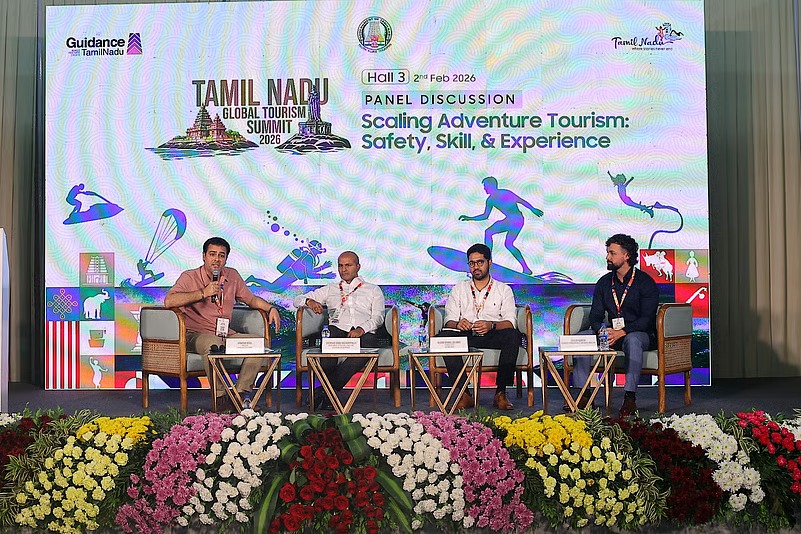
Scaling adventure tourism — safety, skill and experience
What sets Tamil Nadu apart in this evolving landscape is its ability to combine tradition with transformation. While many destinations focus either on preserving heritage or developing modern infrastructure, Tamil Nadu is attempting to do both simultaneously. This dual approach allows it to cater to a wide spectrum of travellers, from those seeking cultural immersion to those looking for contemporary experiences. It also strengthens the State’s ability to engage with international partners, as it offers a diverse and dynamic portfolio of opportunities. The announcement of a Tamil Biennale in January 2027 further reinforces this vision, signalling an intent to position Tamil Nadu as a global hub for art and culture. Such initiatives extend the State’s influence beyond tourism, contributing to its soft power and international cultural presence. By creating platforms that celebrate creativity and heritage, Tamil Nadu is building connections that go beyond economic transactions, fostering deeper cultural exchange. In many ways, the Tamil Nadu Global Tourism Summit 2026 represents more than a policy milestone—it is a statement of intent. It reflects a State that is confident in its identity, ambitious in its goals, and strategic in its approach to global engagement. By leveraging its cultural wealth, embracing innovation, and prioritising sustainability, Tamil Nadu is crafting a model of tourism that is both forward-looking and deeply rooted in its heritage. As the world becomes increasingly interconnected, regions that can effectively balance local identity with global relevance are likely to emerge as leaders. Tamil Nadu’s current trajectory suggests that it is well on its way to achieving this balance. The investments, collaborations, and ideas showcased at the summit are not just indicators of growth, but building blocks of a larger narrative—one that positions Tamil Nadu as a vibrant, inclusive, and globally connected destination.
In the years to come, the true impact of these initiatives will unfold across landscapes, communities, and industries. New destinations will emerge, infrastructure will evolve, and cultural experiences will be reimagined. Yet at the core of this transformation will remain a simple but powerful idea: that Tamil Nadu’s strength lies in its ability to connect—across regions, across cultures, and across the world.