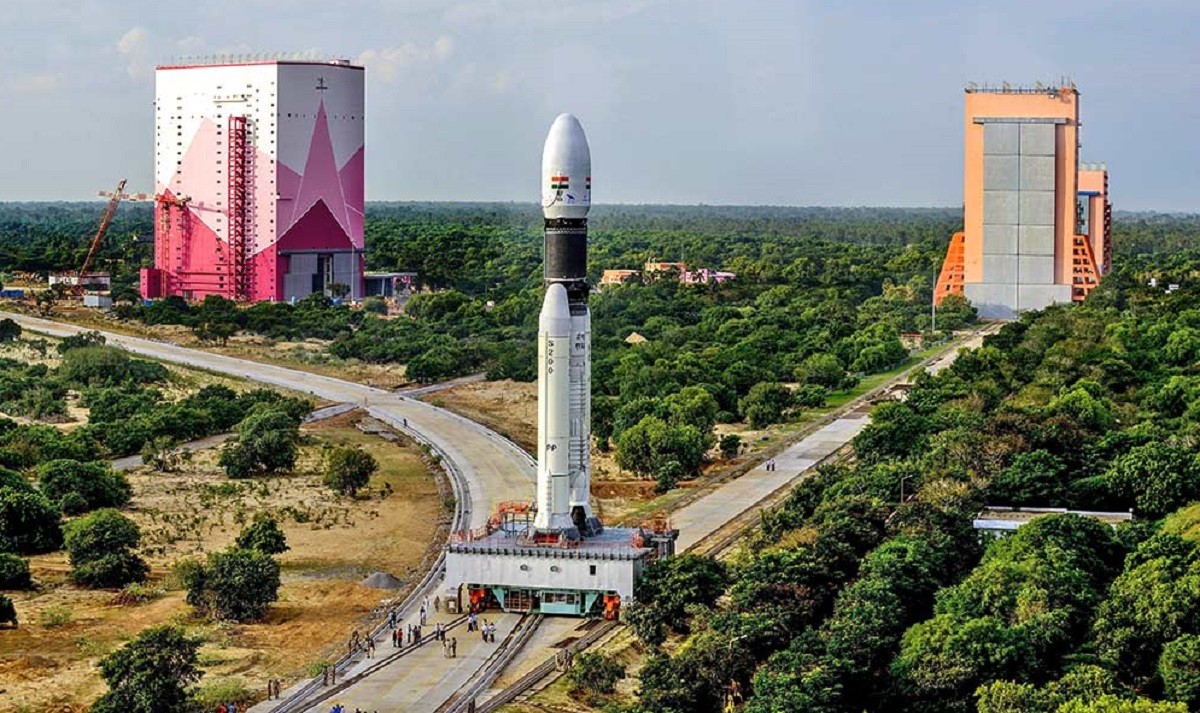
Government’s Strategic Push: Who Took Initiative?
The major catalyst behind the 2025 aerospace–defence expansion is the Tamil Nadu Government, led by Chief Minister M. K. Stalin, through its Tamil Nadu Aerospace & Defence Industrial Policy and targeted Deep Tech Initiatives.
Key bodies driving the mission:
- Tamil Nadu Industrial Development Corporation (TIDCO)
- Guidance Tamil Nadu
- Defence Industrial Corridor (TNDIC) – Chennai to Coimbatore belt
- Dr. T. R. B. Rajaa, Minister for Industries, Investment Promotion & Commerce
Their combined efforts in 2024–2025 brought new FDI, global partnerships, and indigenous R&D investments—making December 2025 a milestone period with multiple project announcements, manufacturing expansions, and collaborations with international aerospace leaders.
Defence Industrial Corridor Boost
(Chennai–Coimbatore Belt Gets Global Attention)
The Tamil Nadu Defence Industrial Corridor (TNDIC), covering Chennai, Hosur, Salem, Coimbatore, and Tiruchirappalli, has become one of India’s fastest-growing defence hubs.
Why it matters in 2025
140+ companies now operate across the corridor.Over ₹6,000 crore private investment has flowed into defence manufacturing. Global players from France, U.S., Israel, and Japan signed partnerships in 2024-2025. Coimbatore is emerging as India’s precision manufacturing capital for aircraft engines and UAV parts. This corridor is now enabling India’s rapid shift toward localized production of engines, avionics, radars, drone systems, and aerospace composites.
Rise of NewSpace Tamil Nadu
(Startups Lead India’s Satellite Revolution)
Tamil Nadu is now home to some of India’s most influential private space startups—especially in Chennai and Tiruchirappalli.
What’s happening in 2025
Satellite propulsion systems built in TN are being integrated into international missions. Startups in Chennai are manufacturing small-satellite buses for ISRO and private launchers. AI-based space data analytics firms are growing rapidly across the state’s tech hubs.
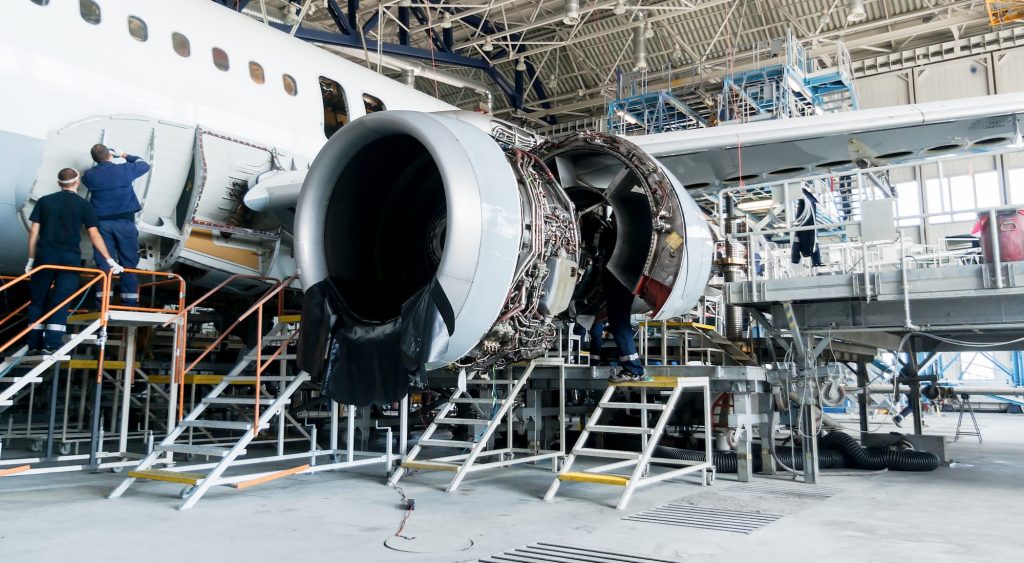
Aerospace manufacturing and MRO in a Tamil Nadu hangar
Why Tamil Nadu leads
The combination of strong engineering colleges, a supportive startup ecosystem, state grants, and access to global aerospace supply chains makes the state India’s biggest NewSpace talent pool after Bengaluru.
Drone & UAV Ecosystem
(Tamil Nadu is Emerging as India’s Drone Hub)
Coimbatore, Hosur, and Chennai have become leading locations for civilian and defence-grade drone R&D. TN-based companies delivered surveillance drones to defence forces under the Make-in-India program. Agriculture drones manufactured in Coimbatore are being exported to Southeast Asia. Drone pilot training academies supported by TIDCO expanded to reach thousands of youth. State-funded drone zones created in Salem and Hosur opened for prototype testing. The state’s advanced component supply chain—motors, sensors, precision machining—gives Tamil Nadu a major advantage in drone manufacturing.
Hosur & Salem Take Flight
(The New Aerospace Engine Belt)
With the presence of global aviation manufacturers, the Hosur–Salem zone is fast evolving into an engine and MRO (Maintenance, Repair & Overhaul) centre.
What expanded in late 2025
New production units for aircraft engine casings and turbine components. Advanced composite material labs supported by DRDO. Partnerships for helicopter component manufacturing.
This region is projected to be a ₹20,000-crore aerospace cluster by 2030.
Defence R&D, Training & Skilling
(Preparing Tamil Nadu’s Future Workforce)
To meet the demands of high-technology industries, the state has prioritized specialized education and skilling.
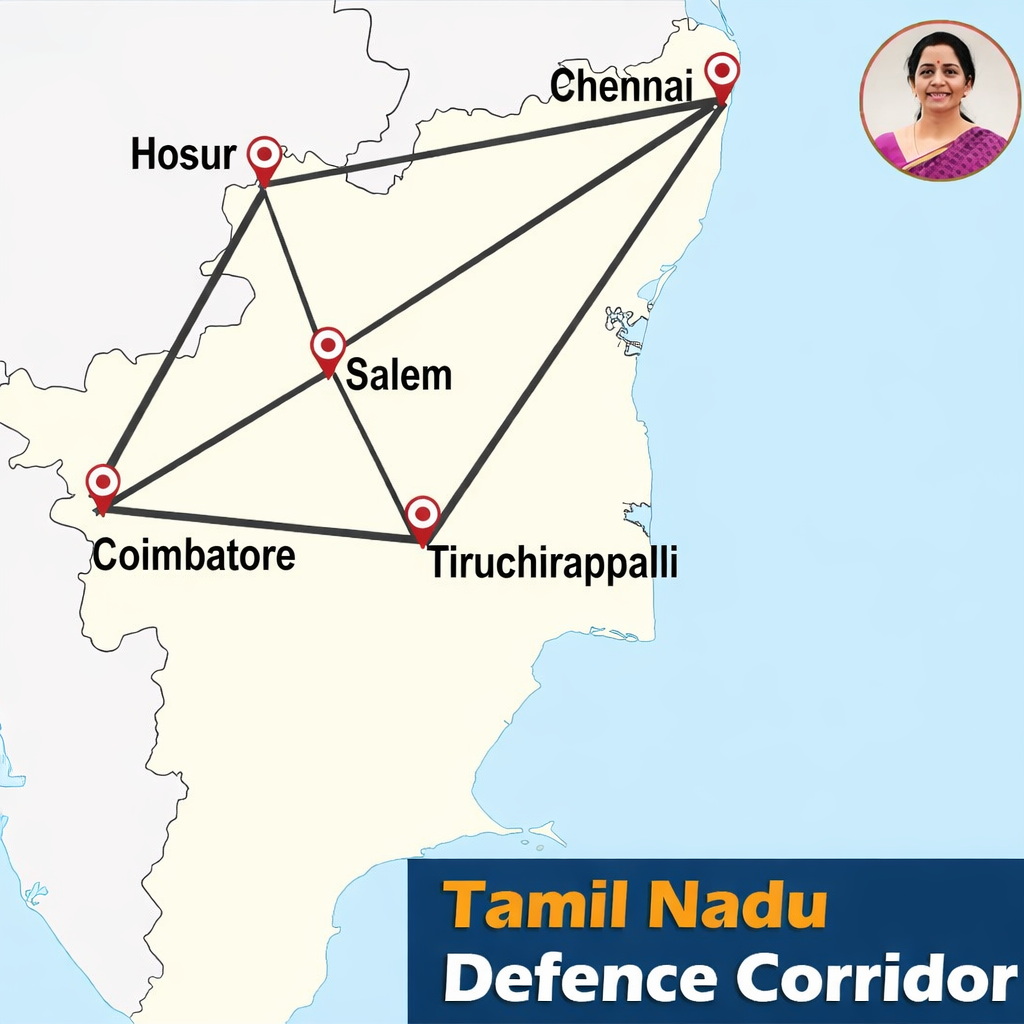
The Tamil Nadu Defence Corridor, linking Chennai, Hosur, Salem, Coimbatore and Tiruchirappalli
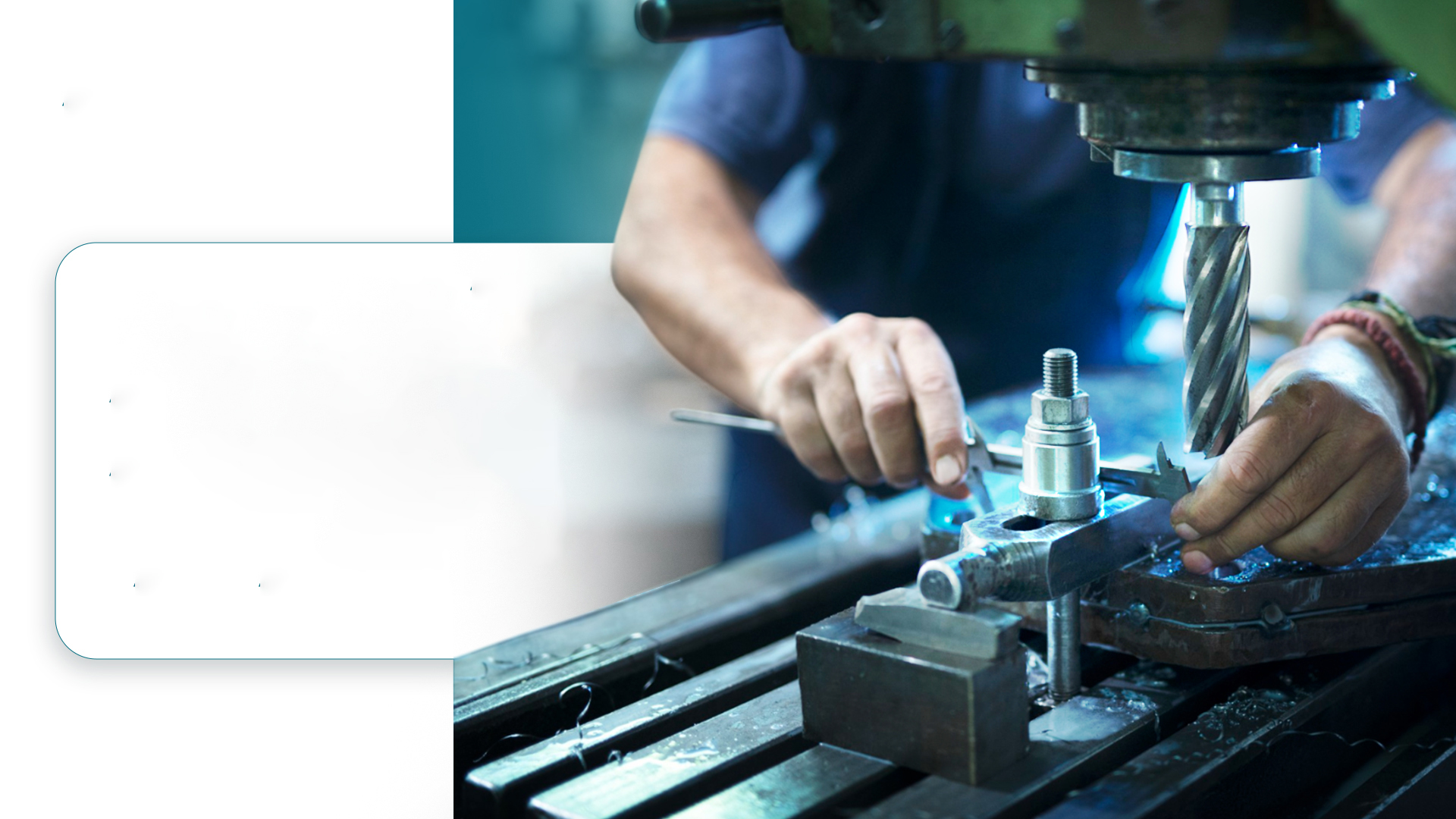
Precision engineering for aerospace and defence components
Current initiatives
DRDO–Academic partnerships with Anna University, PSG Tech, NIT Trichy. New Aerospace Technology Centres in Chennai and Coimbatore. Advanced welding, avionics, and composite-material skill programs for industrial workers. State-backed innovation labs for students in engineering institutions. By focusing on human capital, Tamil Nadu aims to create the world’s most competitive aerospace workforce.
Global Investm
ent Momentum in 2025
The year 2025 recorded high interest from global aerospace giants. Foreign firms from Japan, Germany, France, and the U.S. signed MOUs with TN companies for:
- Engine components
- Landing systems
- Missile subsystems
- Space communication electronics
- UAV sensors
These partnerships highlight Tamil Nadu’s credibility as a global supply chain partner for high-precision defence and space systems.
Tamil Nadu’s Vision for 2030
India’s No. 1 aerospace manufacturing state. A global supplier of aircraft engines & UAV systems. A leading hub for private satellite manufacturing. The home of India’s biggest defence-tech startup ecosystem With continued policy support, strong engineering capability, and increasing global partnerships, the state is on track to become one of Asia’s most powerful aerospace and defence innovation clusters.
December 2025 marks a turning point for Tamil Nadu’s aerospace and defence industry. With sustained government leadership, rising investments, global collaborations, and local innovation, the state is not only powering India’s self-reliance in strategic technology but also creating a world-class ecosystem that will shape the nation’s future in space, aviation, and defence.
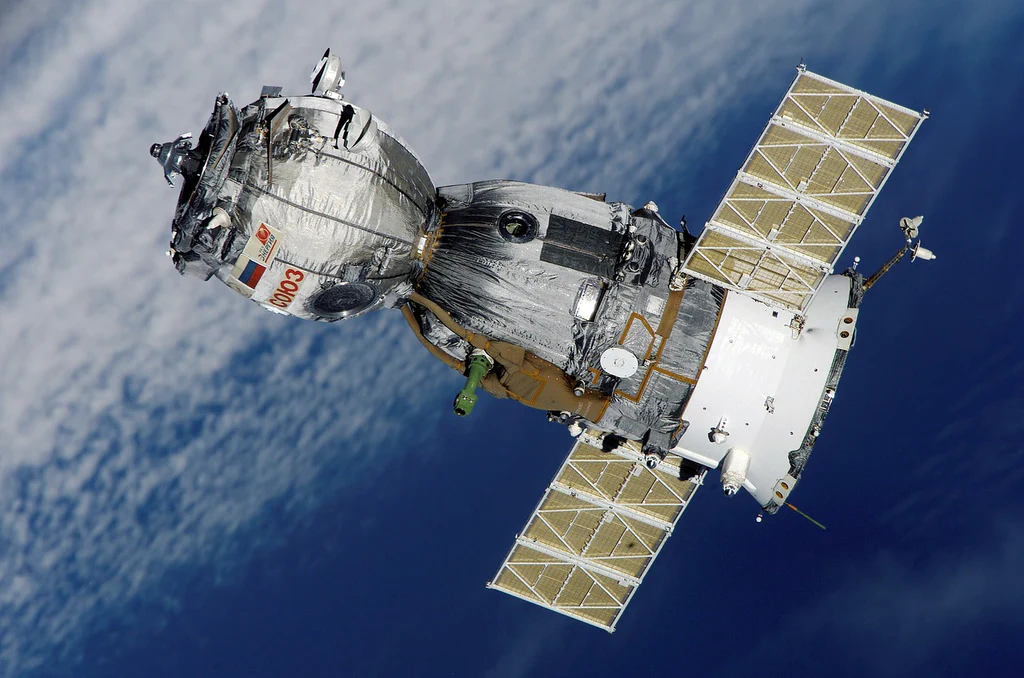
Satellite systems — part of the state's growing space ecosystem
Tamil Nadu’s Defence Industrial Corridor & Leadership
How Policy, Vision, and Innovation Are Building India’s New Defence Hub.Tamil Nadu Defence Industrial Corridor (TNDIC): A Strategic Engine of India’s Defence Growth. The Tamil Nadu Defence Industrial Corridor (TNDIC), stretching across Chennai, Hosur, Salem, Coimbatore, and Tiruchirappalli, has emerged as one of India’s most important defence-manufacturing ecosystems. Launched to boost self-reliance in defence production and reduce dependence on imports, the corridor has become a symbol of India’s technological ambition. It functions as a cluster-based development model, connecting high-level R&D institutions, precision-engineering industries, and global defence suppliers. By December 2025, the TNDIC is witnessing rapid expansion, with over 140 companies actively contributing to aerospace components, missile sub-systems, UAV structures, electronic warfare equipment, and advanced materials. The corridor’s backbone is its strong manufacturing culture—Tamil Nadu’s long-established engineering and automotive industries provide unmatched supply-chain strength. This foundation allows companies to shift smoothly into high-precision defence manufacturing, making the Chennai–Coimbatore belt one of Asia’s most promising defence-tech development zones.
Chennai Node: High-Technology Manufacturing & Systems Integration
Chennai serves as the headquarters of the corridor and acts as a gateway for major defence and aerospace investments. The region houses facilities for aircraft components, naval electronics, radars, and advanced propulsion systems. Large industrial estates near Sriperumbudur and Oragadam now host facilities engaged in building electronics for communication systems, mission-critical PCBs, and military-grade semiconductor packaging. The presence of DRDO-supported labs, aerospace R&D clusters, and engineering giants has turned Chennai into a hub for advanced defence electronics. Many global companies have chosen the city as their base for India operations, integrating TN’s precision engineering into their global supply chains. By late 2025, Chennai’s defence exports have risen significantly, with multiple international partnerships supporting new tech incubators and testing facilities.
Coimbatore Belt: India’s Precision Manufacturing Capital Steps Into Defence
Coimbatore, already hailed as the “Manchester of South India,” has become a powerhouse of precision engineering, supplying critical parts for aircraft engines, UAV structures, missile casings, and robotics hardware. The city’s MSMEs—over 5,000 of them—have transformed themselves into Tier-II and Tier-III defence suppliers. With strong capabilities in CNC machining, metallurgy, motor manufacturing, and composite materials, Coimbatore has become indispensable to the TNDIC. Defence startups and global companies rely heavily on the region’s ability to deliver world-standard, high-tolerance components. In 2025, new defence parks and testing labs have further accelerated innovation, especially in UAV propulsion systems, advanced gear assemblies, and drone-motor technology.
Hosur & Salem: Emerging Aerospace & Unmanned Systems Clusters
Hosur is fast becoming the corridor’s aviation engine. The region houses major aircraft-component factories, drone-manufacturing hubs, and India’s fastest-growing helicopter-subsystem cluster. Its proximity to Bengaluru’s aerospace ecosystem gives it a unique advantage—allowing companies to collaborate while leveraging Tamil Nadu’s favourable industrial policies and skilled workforce. Salem, on the other hand, is emerging as a dedicated zone for UAV testing, aerospace material R&D, and defence electronics. The government has already announced multiple drone flight-testing zones, helping startups validate prototypes and accelerate certification cycles. Salem is also strengthening its metallurgical capabilities, which are crucial for missile structures and engine components.
Tiruchirappalli: Engineering Expertise for India’s Defence Needs
Tiruchirappalli, known for its legacy in heavy engineering, contributes critical structures and fabrication for missiles, naval systems, and ground-combat machinery. The city’s long association with industrial giants has given it a mature workforce capable of handling large-scale defence manufacturing. As part of the TNDIC, Tiruchirappalli is now moving into next-generation defence fabrication—especially high-strength alloys, precision pipes, and aerospace welding technologies.
Policy Leadership & Vision: The Role of Dr. T. R. B. Rajaa
The transformation of Tamil Nadu’s defence and aerospace sectors in 2024–2025 is closely linked to the leadership of Dr. T. R. B. Rajaa, the state’s Minister for Industries, Investment Promotion & Commerce. His dynamic, industry-focused approach has helped position Tamil Nadu as one of India’s biggest destinations for global defence investment. Dr. Rajaa has championed investments by engaging directly with global aerospace and defence companies, conducting international roadshows, and establishing investor confidence in Tamil Nadu’s reliability, infrastructure, and skilled workforce. His efforts have resulted in new MoUs in defence electronics, UAVs, missile components, aerospace machining, and private satellite manufacturing.

AeroDefCon'25, inaugurated by Chief Minister M. K. Stalin
A New Era of Defence Innovation Under Dr. Rajaa’s Leadership
Dr. Rajaa’s approach is built on three pillars:
Industrial Innovation – Encouraging homegrown companies and startups to build indigenous defence technologies.
Global Partnerships – Inviting companies from Japan, France, Israel, and the U.S. to co-develop advanced systems.
Workforce Modernisation – Focusing on engineering education, specialized skill programs, and high-tech employment zones.
He has been instrumental in launching initiatives that directly support the Defence Corridor—such as electronics parks, precision engineering clusters, drone training centres, and advanced R&D labs in collaboration with DRDO and academic institutions. Under his guidance, Tamil Nadu’s industrial ecosystem is transitioning from traditional manufacturing to deep-tech, innovation-led defence production, putting the state at the heart of India’s self-reliance mission.
TNDIC + Leadership = Tamil Nadu’s Rise as a Strategic Powerhouse
The combination of the Defence Industrial Corridor’s structural strength and Dr. T. R. B. Rajaa’s investment-led strategy has created a powerful momentum in Tamil Nadu. The state is no longer just a manufacturing hub—it is becoming a global destination for aerospace, defence, and next-generation technology. Tamil Nadu’s model—industry-friendly policies, strong innovation culture, and proactive leadership—offers a blueprint for India’s defence modernization efforts. The Chennai–Coimbatore Defence Industrial Corridor, strengthened by precise engineering and a robust supply chain, is reshaping India’s defence manufacturing landscape. Coupled with the vision and leadership of Dr. T. R. B. Rajaa, Tamil Nadu is rapidly emerging as a strategic technology powerhouse with global relevance. The state is now positioned not only to support India’s defence needs but also to contribute significantly to the world’s aerospace and defence industries.