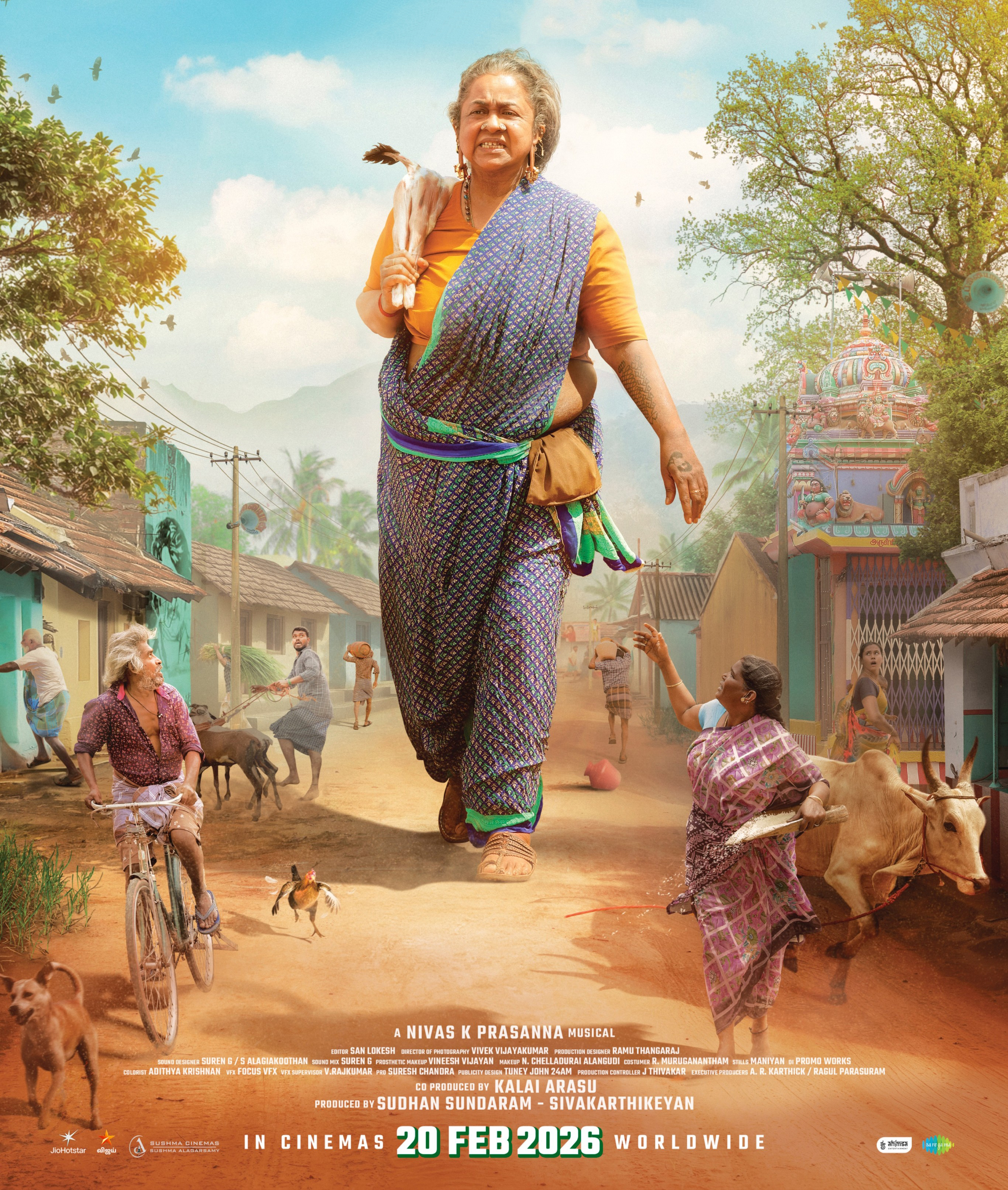
Karumathur
A Village That Breathes Life
One of the film’s biggest strengths lies in its setting. Karumathur is not simply a backdrop — it feels alive. Every street, temple corner, loudspeaker announcement, and eccentric personality contributes to building a world rich with humour and familiarity.The village exists somewhere between realism and exaggeration, creating a charming cinematic space where absurdity coexists with emotional truth. There is a drunken man entrusted with maintaining the sacred temple lamp, loudspeakers that seem to magically play songs appropriate to unfolding situations, and a deeply local sense of humour that resonates instantly with audiences.This colourful ecosystem becomes one of the film’s defining achievements. Rather than romanticizing rural life, Thaai Kizhavi captures its contradictions — warmth and conflict, affection and greed, faith and frustration — all within a believable social framework.
Pavunuthaayi
The Powerful Heart of the Story
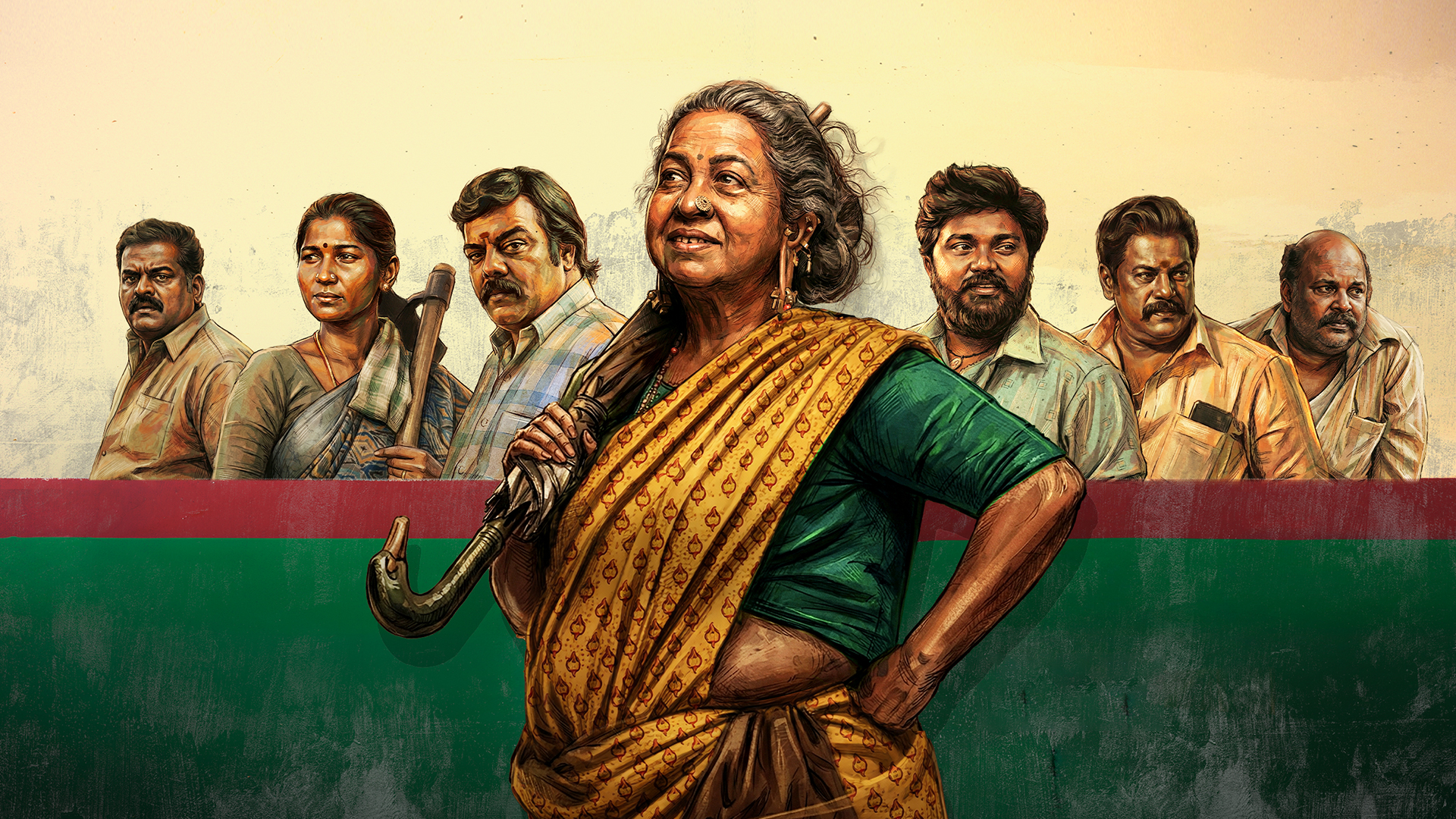
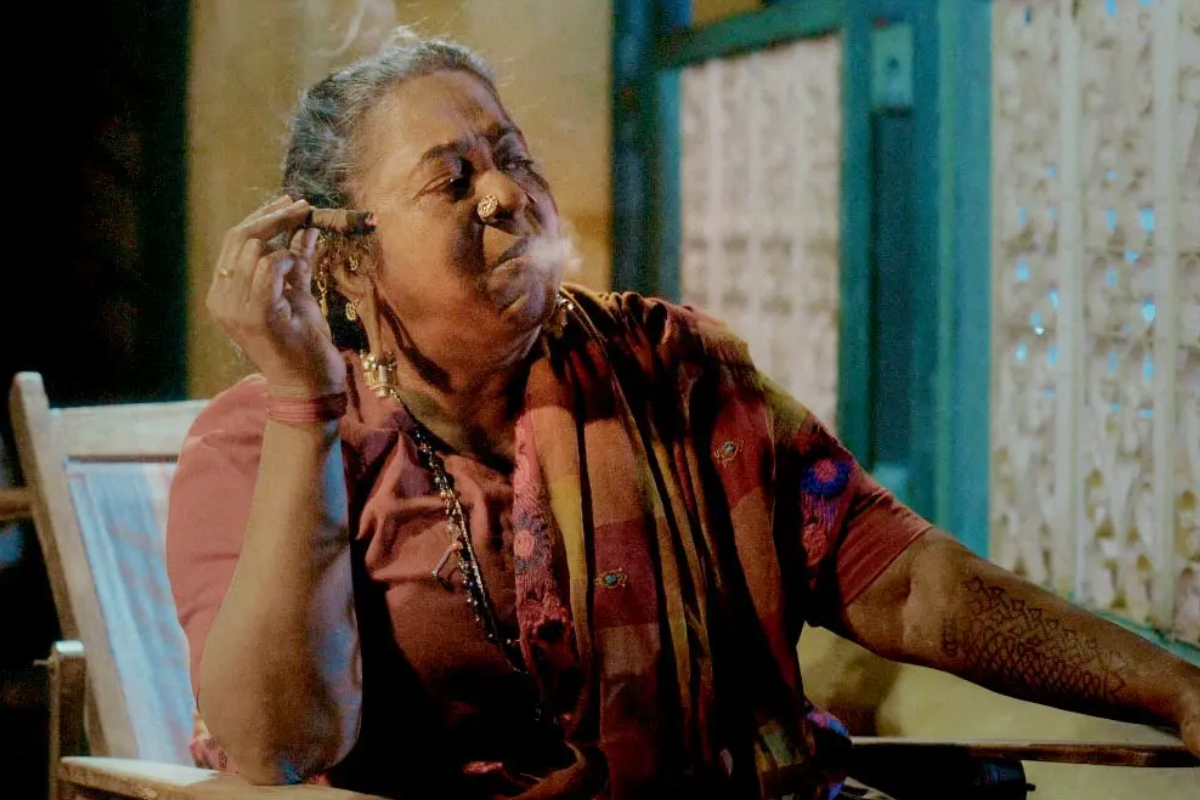
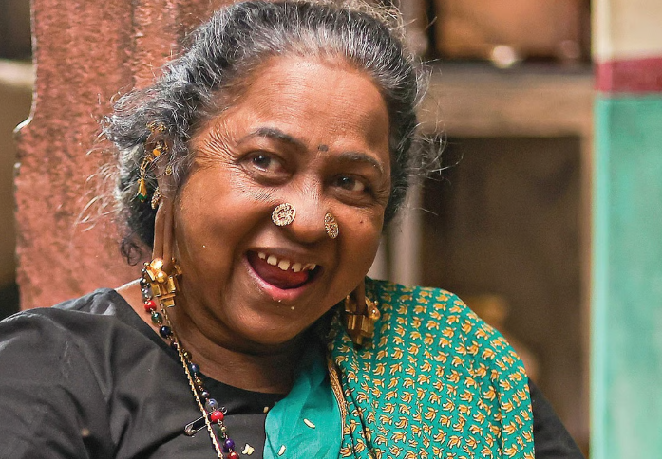
At the centre of the narrative stands Pavunuthaayi, portrayed brilliantly by veteran actor Radikaa Sarathkumar. She is not written as a conventional elderly matriarch but as a commanding figure who simultaneously embodies love, fear, generosity, and authority.Pavunuthaayi is the emotional and moral centre of Karumathur. She lends money, commands respect, disciplines those around her, and remains deeply spiritual. Her personality is marked by contradictions: she prays for everyone’s wellbeing, yet fiercely collects debts from villagers with intimidating confidence.The film cleverly balances these opposing traits, making her feel authentic rather than idealized. Through Pavunuthaayi, the narrative explores motherhood, sacrifice, power, and the unseen burdens carried by elderly women within families.Radikaa’s performance deserves particular praise for carrying emotional weight without melodrama. Her screen presence anchors the film and elevates many of its emotional moments.
Comedy Rooted in Character, Not Chaos
What separates Thaai Kizhavi from many contemporary rural entertainers is its approach to humour. The comedy never feels forced or dependent on exaggerated slapstick. Instead, it emerges naturally from character behaviour and relationships.Pavunuthaayi’s three sons, each flawed in hilarious ways, become central sources of entertainment. Their selfishness, foolishness, and petty ambitions create memorable comic situations while simultaneously exposing deeper truths about family dynamics.From an auto driver obsessed with quick gains to an ardent cinema fan who prioritizes film music over practicality, the characters feel eccentric yet believable. Their interactions produce consistent humour without sacrificing emotional credibility.Importantly, the jokes rarely descend into vulgarity or cheap comedy. Sivakumar Murugesan demonstrates restraint, ensuring that humour remains accessible while preserving dignity and emotional purpose.
Comedy Rooted in Character, Not Chaos
A Story About Family, Greed, and Hidden Truths
The emotional conflict begins when Pavunuthaayi suddenly becomes bedridden, forcing her estranged sons to return home. However, their concern stems less from affection and more from inheritance.The revelation that Pavunuthaayi may possess hidden wealth sets off the central conflict of the story. What unfolds is not merely a family drama about money, but a layered exploration of greed, loyalty, emotional neglect, and redemption.The screenplay succeeds because it constantly shifts audience expectations.
Comedy seamlessly gives way to emotional revelations, while moments of selfishness unexpectedly lead to reflection and vulnerability.Beneath its entertaining surface, Thaai Kizhavi asks difficult questions about how families value elderly parents and whether affection becomes transactional in times of crisis.

A Story About Family, Greed, and Hidden Truths
A Story About Family, Greed, and Hidden Truths
Music, Nostalgia, and Cultural Memory
Another standout aspect of the film is its imaginative use of classic Tamil film songs. Instead of using nostalgia merely as fan service, the soundtrack becomes part of the storytelling itself.Several iconic songs, particularly those associated with Kamal Haasan, are woven organically into scenes, creating emotional and comedic resonance. The placement of these songs often heightens humour while simultaneously evoking collective cultural memory among audiences.Sivakumar Murugesan displays a remarkable understanding of how music shapes mood. Rather than simply adding familiar tracks, he carefully integrates them into visual storytelling, editing, and scene composition.The result is a film experience that feels deeply connected to Tamil cinema’s legacy while still maintaining its own identity.
Progressive Themes Without Preaching
One of the most impressive qualities of Thaai Kizhavi is its ability to engage with social issues without becoming overly didactic.The film subtly addresses themes such as gender, healthcare costs, education, family responsibility, and linguistic barriers. It champions women’s strength and contribution without reducing its message to simplistic slogans.Certain moments involving communication gaps and healthcare institutions highlight real social problems while remaining emotionally engaging. Instead of moralizing, the film trusts audiences to absorb its observations naturally.This balance between entertainment and meaningful commentary is increasingly rare in mainstream cinema and contributes significantly to the film’s appeal.
Progressive Themes Without Preaching
A Confident Debut for a New Filmmaker
For a debut filmmaker, Sivakumar Murugesan displays unusual confidence and maturity. His storytelling instinct feels assured, his pacing mostly controlled, and his emotional beats carefully earned.
What makes Thaai Kizhavi particularly impressive is how seamlessly multiple genres coexist. Comedy, social drama, family conflict, and emotional storytelling blend together without overwhelming the audience.The film also avoids many common pitfalls of contemporary Tamil cinema, particularly the tendency toward excessive emotional manipulation or overextended narratives.Instead, it feels focused, heartfelt, and deeply human.

A Confident Debut for a New Filmmaker
Why Thaai Kizhavi Matters in 2026
More than just a successful film, Thaai Kizhavi represents a reminder of what Tamil mainstream cinema can achieve when storytelling takes precedence over formula.It reconnects audiences with the emotional richness of rural narratives while presenting them through a contemporary lens. The film celebrates community, family, and cultural identity without nostalgia becoming its only strength.In a year where Tamil cinema has struggled to find momentum, Thaai Kizhavi feels like an important turning point — a film that demonstrates audiences still crave stories rooted in authenticity.With this remarkable debut, Sivakumar Murugesan has not merely introduced himself as a filmmaker; he has announced the arrival of a fresh cinematic voice capable of reshaping mainstream storytelling.Thaai Kizhavi is more than a rural entertainer — it is proof that heartfelt, culturally grounded cinema can still move audiences, provoke thought, and bring joy in equal measure.