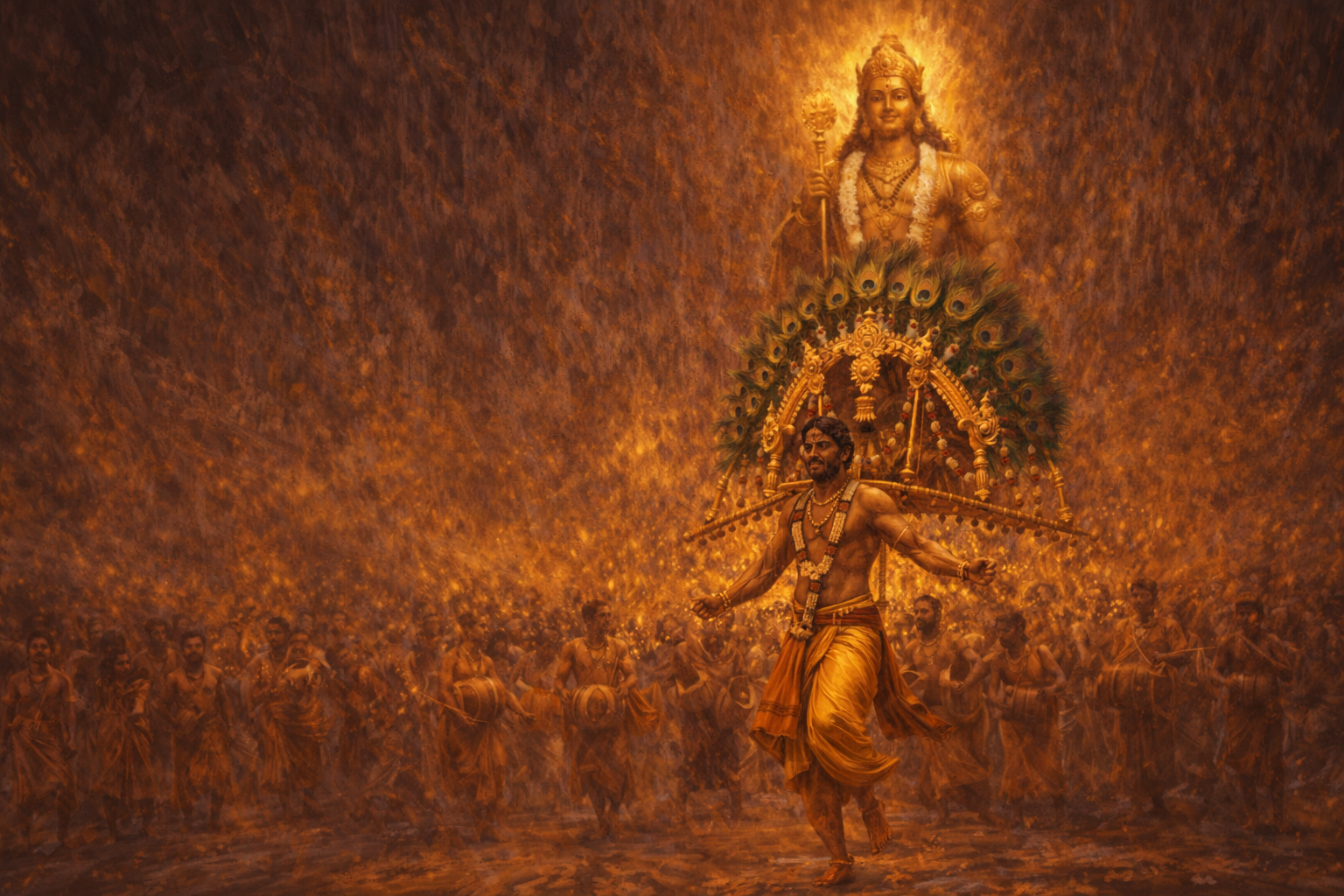
Mythological Origins: The Story of Idumban
The legend behind Kavadi Attam traces back to the story of Idumban, a devoted disciple of Sage Agathiyar. Assigned the task of carrying two hills as penance, Idumban tied them to a pole, creating the earliest form of the kavadi. After an encounter with Lord Murugan on Palani Hill, Idumban surrendered his pride and attained divine grace. Inspired by his devotion, Murugan declared that anyone carrying a kavadi with sincerity would be blessed. This myth remains the spiritual foundation of the ritual, reminding devotees that humility and perseverance are pathways to divine mercy.
The Kavadi: Symbol of Faith and Sacrifice
The kavadi itself is a beautifully crafted offering, often made from bamboo, wood, cloth, flowers, peacock feathers, and vibrant decorations symbolizing purity and devotion. Each kavadi represents a personal burden—physical, emotional, or spiritual—that the devotee chooses to carry as a vow to Murugan. While some carry simple kavadis decorated lightly with flowers, others opt for elaborate structures weighing several kilograms, turning their journey into an act of profound endurance and spiritual surrender.
Ritual Preparation: Discipline, Purity, and Vows
Performing the Kavadi Attam is not spontaneous—it requires days or even weeks of preparation. Devotees undertake strict vratham, observing celibacy, consuming satvik food, avoiding worldly distractions, and engaging in prayer, meditation, and temple visits. Many wear saffron or yellow attire, symbolic of Murugan’s divine energy. The preparation is believed to cleanse the mind and purify the body, aligning the devotee’s spirit with the purpose of the ritual. For many, this period becomes a transformative journey of introspection and self-control.
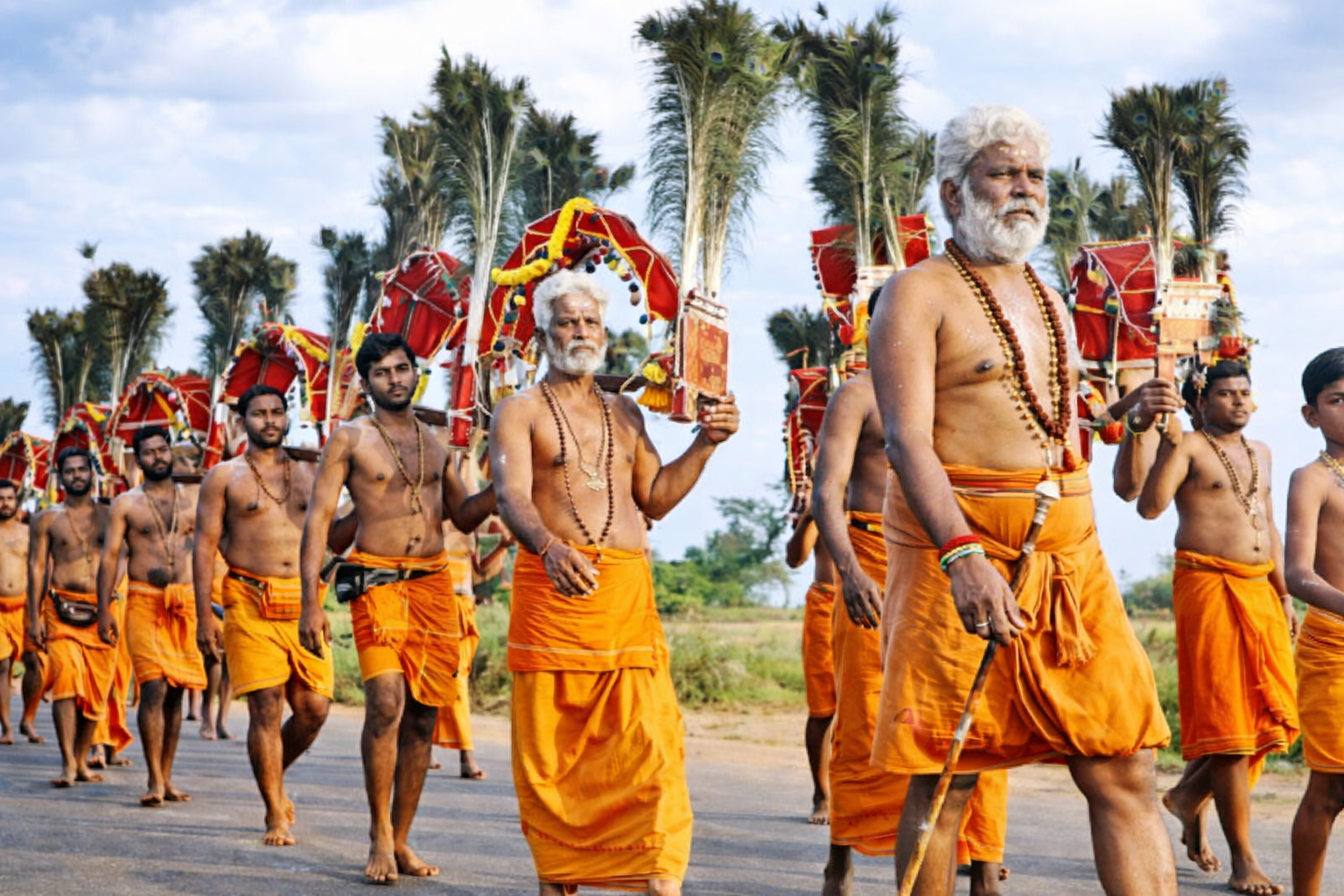
Devotees bear the ornate kavadi
The Dance of Devotion: Movement, Rhythm, and Trance
The actual performance of Kavadi Attam is a mesmerizing blend of rhythmic steps, swaying movements, chants, and musical beats. As nadaswaram and thavil players intensify the tempo, devotees enter a meditative, trance-like state, dancing with their kavadi balanced on their shoulders. The movements are energetic yet controlled, symbolizing the soul’s attempt to transcend physical limitations. The repetitive rhythms, the weight of the kavadi, and the spiritual chants collectively create an atmosphere of divine ecstasy, drawing spectators into the emotional power of the ritual.
Pain, Piercing, and Symbolic Endurance
In some traditions, devotees choose to express extreme devotion through body piercings—such as cheek skewers, tongue piercing, or hooks attached to the kavadi. These acts, performed under strict ritual supervision, are seen as symbols of discipline and the renunciation of worldly desires. Many believe that during the ritual, devotees experience reduced pain due to deep devotion and heightened spiritual focus. Though optional and not universally practised, these elements reflect the intensity of faith embedded in the tradition.
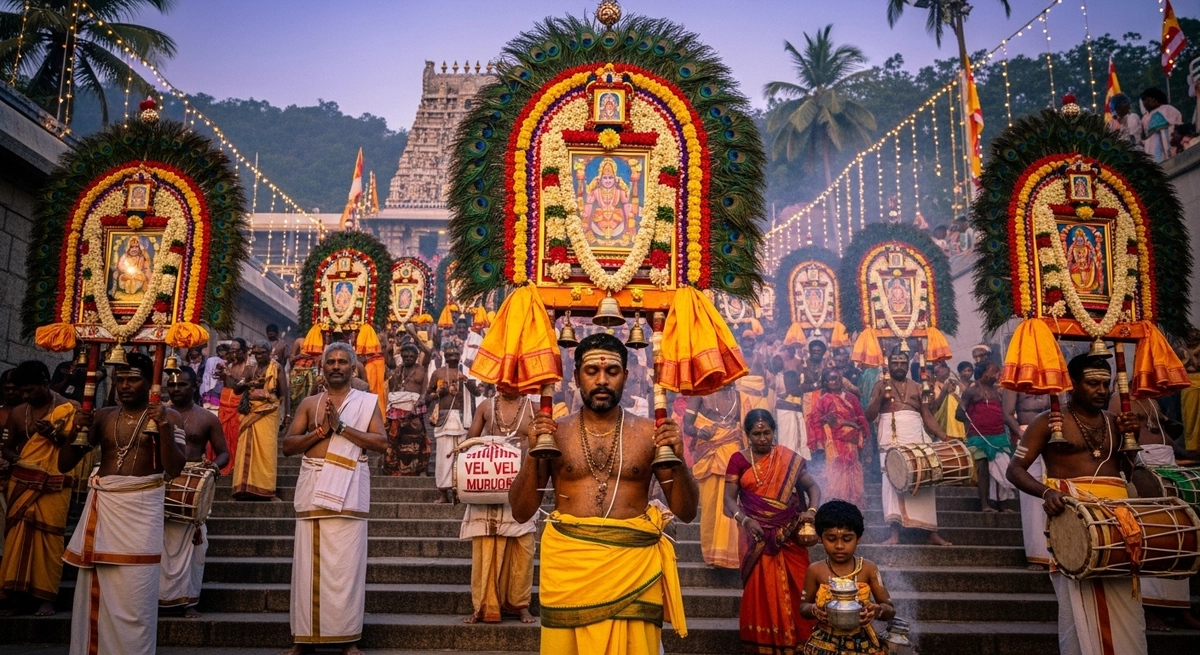
A ritual of penance and devotion
Community Processions: A Collective Spiritual Experience
Kavadi Attam is often performed in large processions, where families, musicians, temple priests, and entire communities accompany devotees on their journey to Murugan temples. Streets come alive with music, chanting of “Vel! Vel! Muruga Vel!”, flower offerings, and the fragrance of camphor. These processions reinforce unity, compassion, and shared devotion, making every Kavadi festival a vibrant cultural and spiritual event. For rural and urban communities alike, the ritual becomes a way of reconnecting with tradition and collective identity.
Festivals Celebrating Kavadi Attam
The most iconic festival associated with Kavadi Attam is Thaipusam, celebrated with grandeur at Palani, Tiruchendur, Marudamalai, and other Murugan shrines. During this period, thousands undertake kavadi yatra, walking miles barefoot or ascending hills to offer their vows. Other major celebrations include Panguni Uthiram, honoring divine unions, and Skanda Sashti, marking Murugan’s victory over Surapadman. Each festival carries unique rituals, local customs, and variations of the kavadi tradition, enriching the cultural landscape of Tamil Nadu.
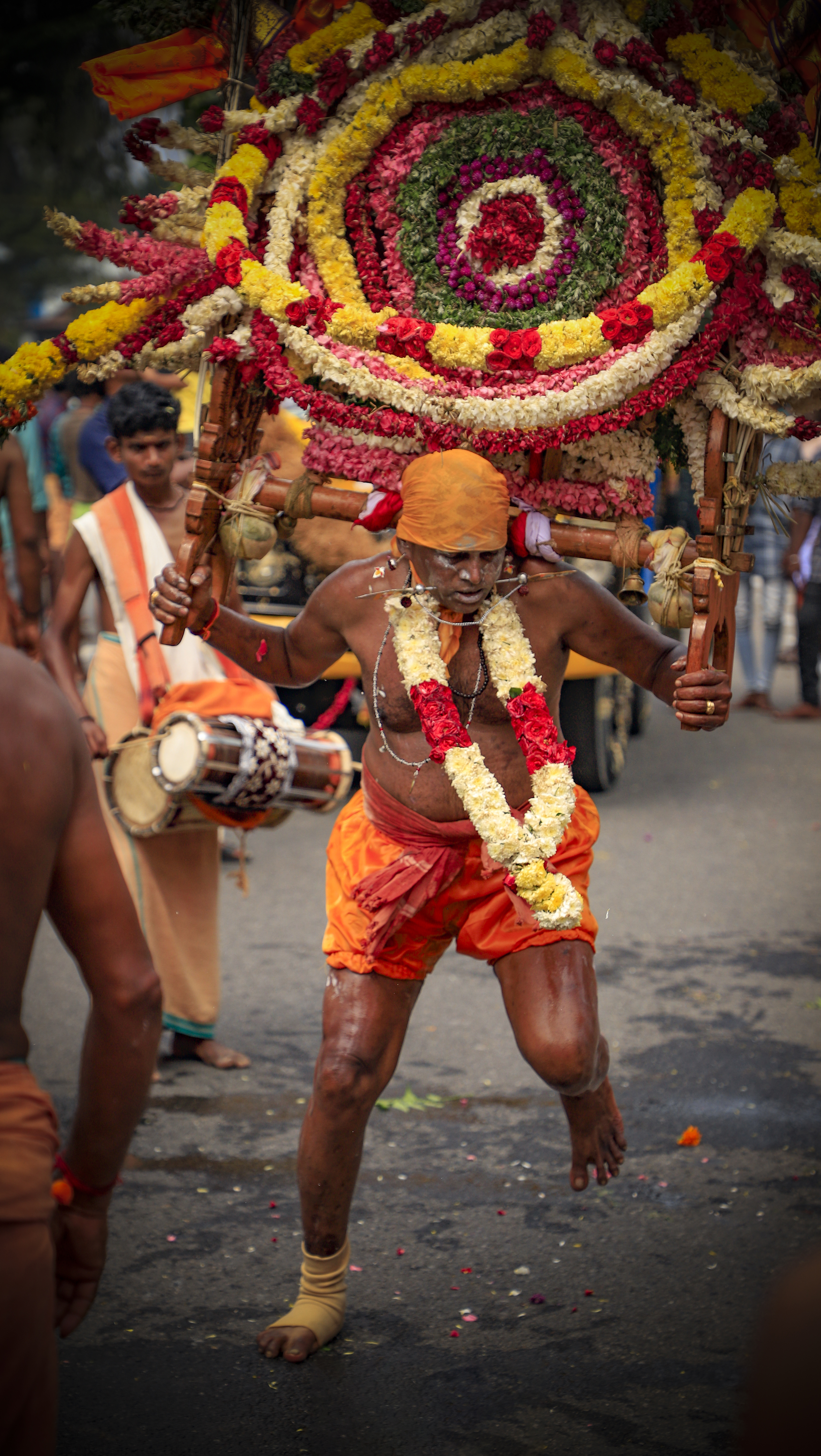
Vibrant processions during Thaipusam
Cultural and Sociological Significance
Beyond its religious importance, Kavadi Attam plays a key role in preserving Tamil heritage. It nurtures traditional music, costume-making, folk dance, and ritual craftsmanship. For many rural artisans, festival seasons provide livelihood through kavadi construction and performance-related arts. The ritual also strengthens family bonds, as vows are often made collectively for health, prosperity, or gratitude. In this way, Kavadi Attam serves as both a spiritual and social anchor within Tamil communities.
Modern Adaptations and Global Reach
While deeply rooted in tradition, Kavadi Attam has evolved to reflect modern sensibilities. Urban temples conduct shorter, organized processions; young participants use lightweight kavadis; and safety measures are more widely followed. The ritual has also gained international visibility, especially in Malaysia, Singapore, Sri Lanka, and among the Tamil diaspora worldwide. Despite modernization, the emotional intensity and devotional core of Kavadi Attam remain intact, proving its enduring appeal across generations.
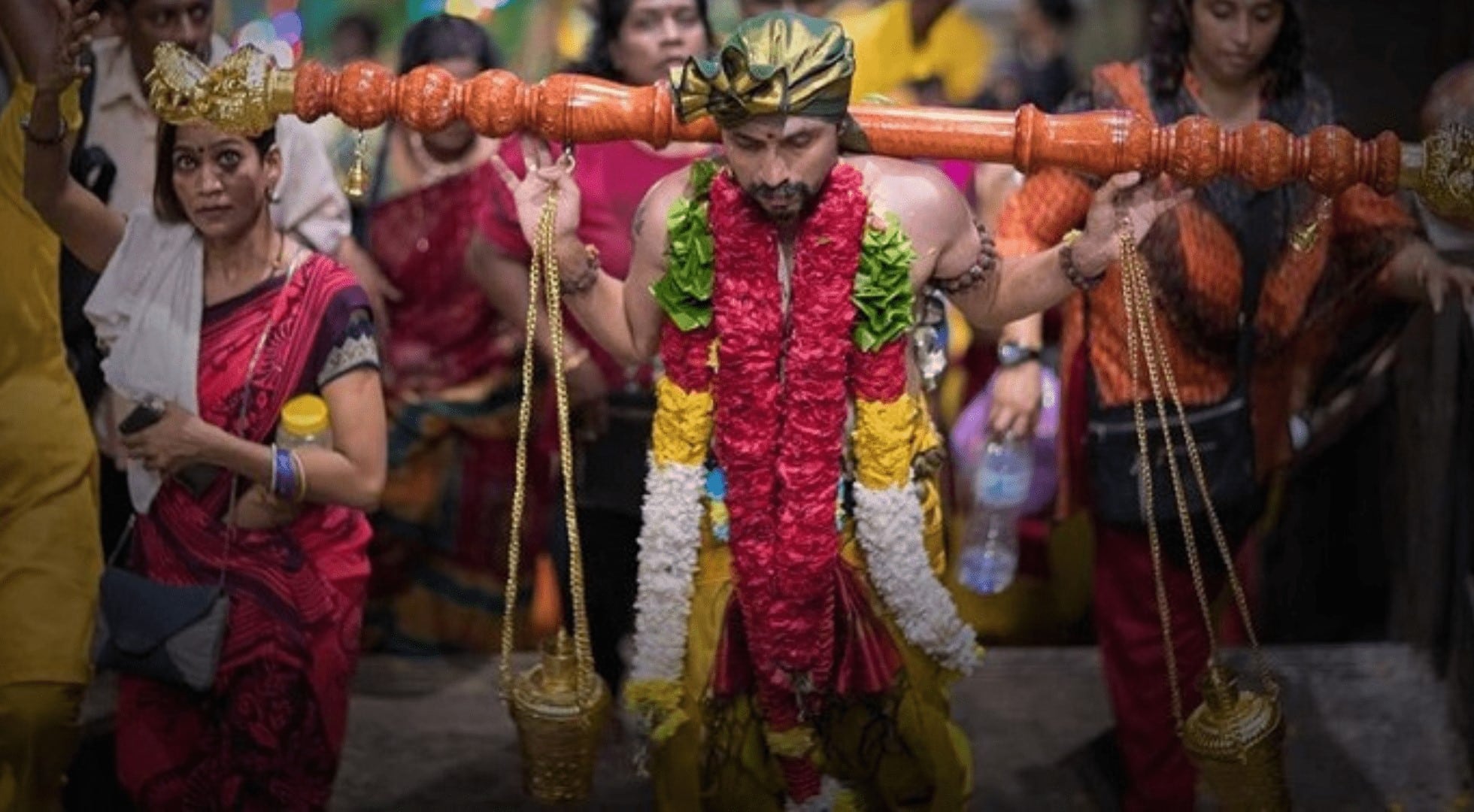
The kavadi, adorned and carried on the shoulders
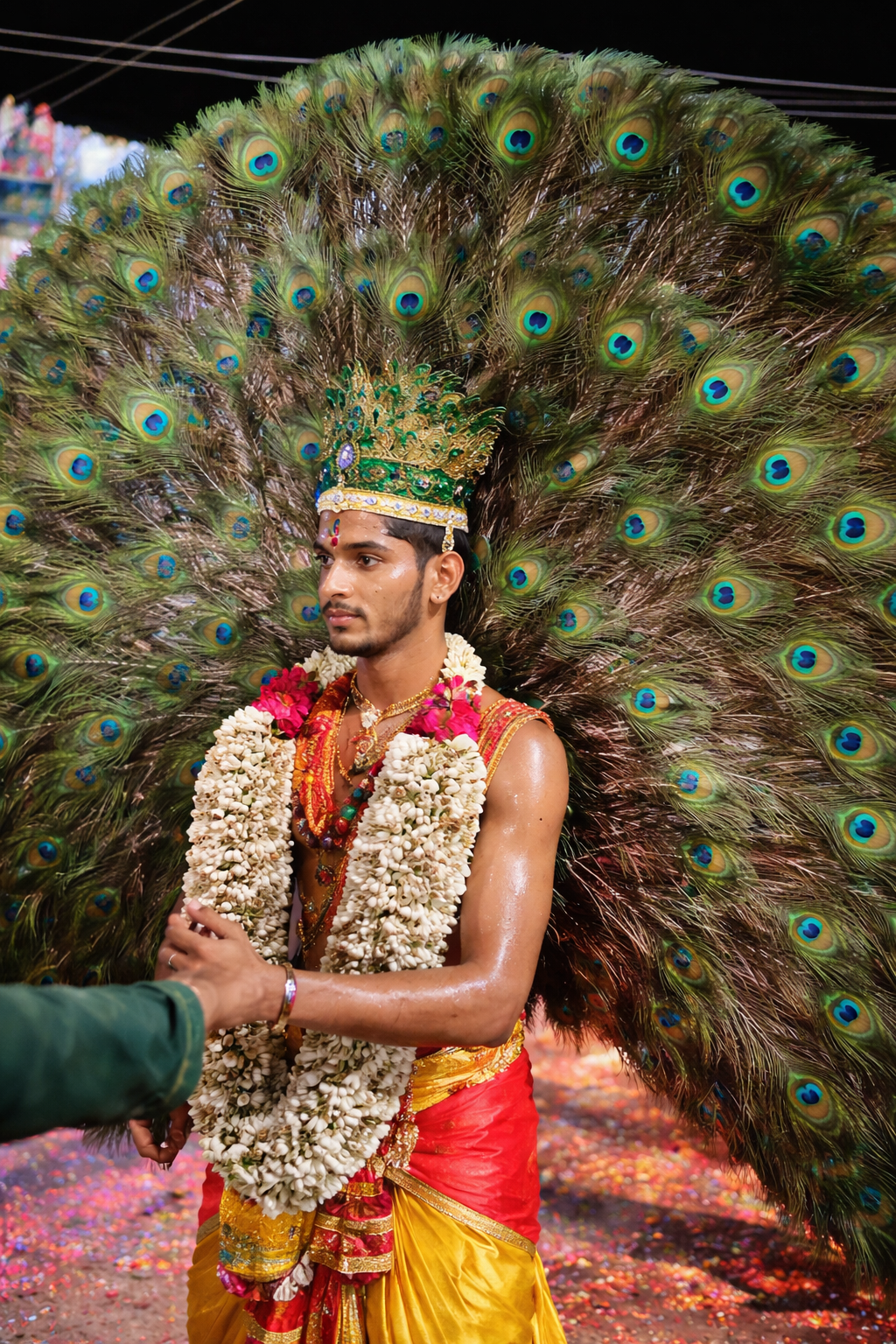
Faith expressed through rhythm and dance
The Eternal Flame of Devotion
Kavadi Attam stands as a timeless symbol of Tamil Nadu’s spiritual strength and cultural richness. It embodies sacrifice, discipline, devotion, and the unbreakable bond between Lord Murugan and his devotees. Whether performed on temple streets, during grand festivals, or in distant lands, the essence of Kavadi Attam continues to inspire awe, unity, and unwavering faith. In a rapidly changing world, this ritual dance remains a powerful reminder that true devotion can lift burdens, purify the soul, and bring divine blessings to all who seek it with sincerity.