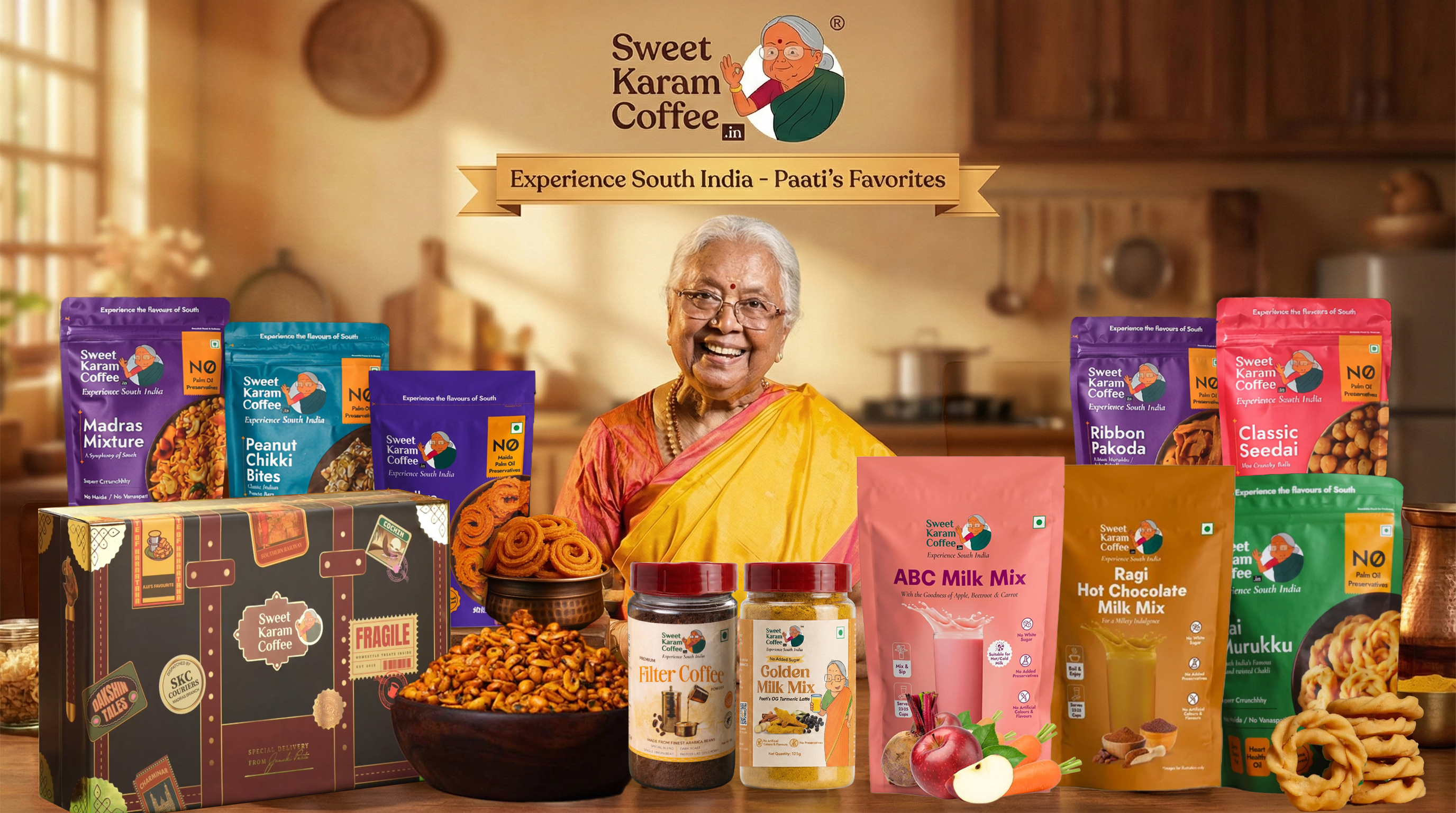
In a marketplace crowded with protein bars, plant-based snacks, and algorithm-driven food trends, Sweet Karam Coffee has grown by doing the opposite of what modern food branding usually demands. It has slowed down. It has looked backward. And in doing so, it has built one of India's most emotionally resonant direct-to-consumer food brands — one rooted in memory, patience, and the deeply personal act of home cooking.
Founded in Chennai in 2015, Sweet Karam Coffee is a South Indian food brand offering traditional sweets, snacks, and beverages made the way they once were — without refined flour, palm oil, artificial preservatives, or industrial shortcuts. Yet its real product is not Mysore Pak or murukku alone. It is the feeling of home for those who are far from it, and the reassurance of continuity for a generation that fears losing its culinary inheritance. At the heart of this story is a grandmother, Janaki Paati, whose kitchen became the brand's moral centre. Her recipes, passed down through practice rather than paper, now travel across continents, carrying with them the textures, aromas, and rituals of South Indian households.
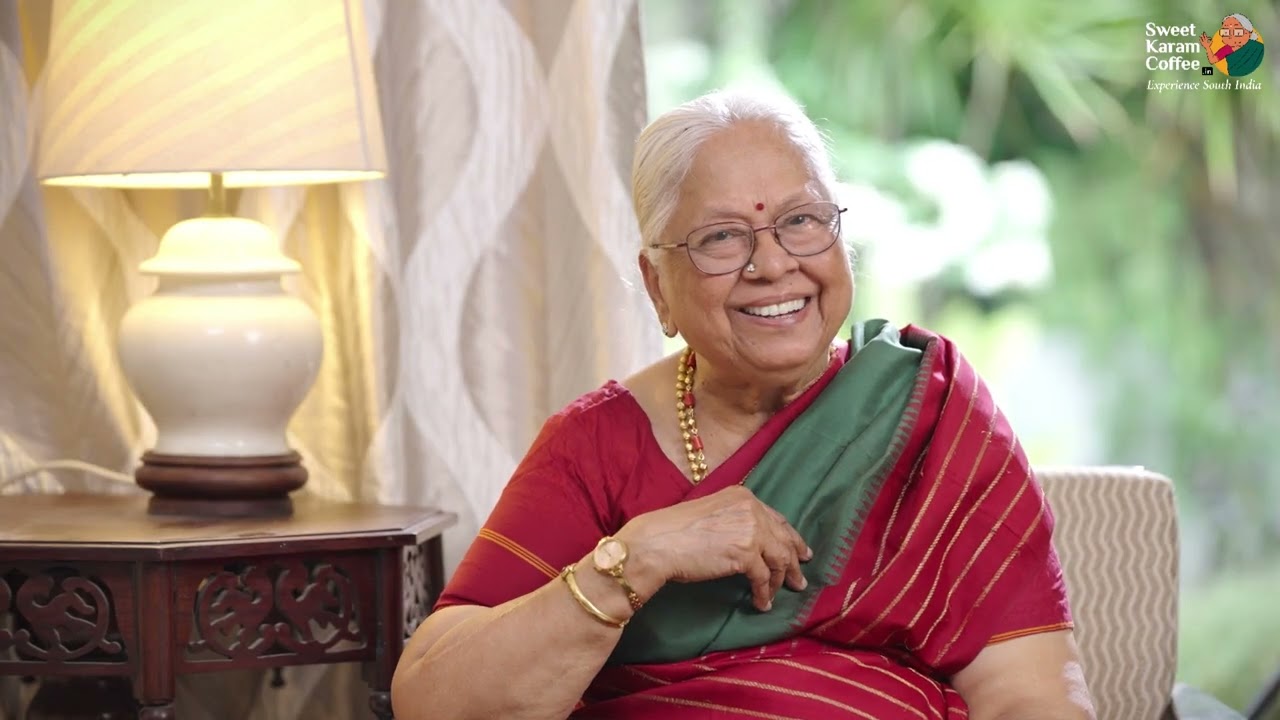
Janaki Paati — the brand's anchor and soul. Her recipes, made with instinctive precision over a lifetime, became the foundation on which Sweet Karam Coffee was built.
From a Family Memory to a Shared Mission
Sweet Karam Coffee was founded by four cousins — Nalini Parthiban, Anand Bharadwaj, Srivatsan Sundararaman, and Veera Raghavan — who shared a common childhood shaped by food. Their grandmother's cooking was not a special occasion affair; it was everyday nourishment, made with instinctive precision and care. For years, those flavours lived only in memory, resurfacing during festivals or rare family gatherings. As careers and lives scattered them across cities and countries, the cousins began to recognise a quiet, collective longing — not just their own, but that of countless others who had moved away from home.
South Indian food, they noticed, was either over-commercialised or reduced to stereotypes. The nuance of home cooking — the balance, restraint, and emotional intelligence of it — was missing. Sweet Karam Coffee emerged from this gap. What began as a modest experiment, backed by a small investment and a large amount of faith, was never intended to be a startup chasing valuations. It was a response to absence: the absence of trustworthy food, of familiar flavours, of the assurance that what one eats is made with care.
Janaki Paati was not positioned as a mascot for branding convenience. She became the brand's anchor. Her image, her recipes, and her presence served as a constant reminder that growth should never come at the cost of integrity.
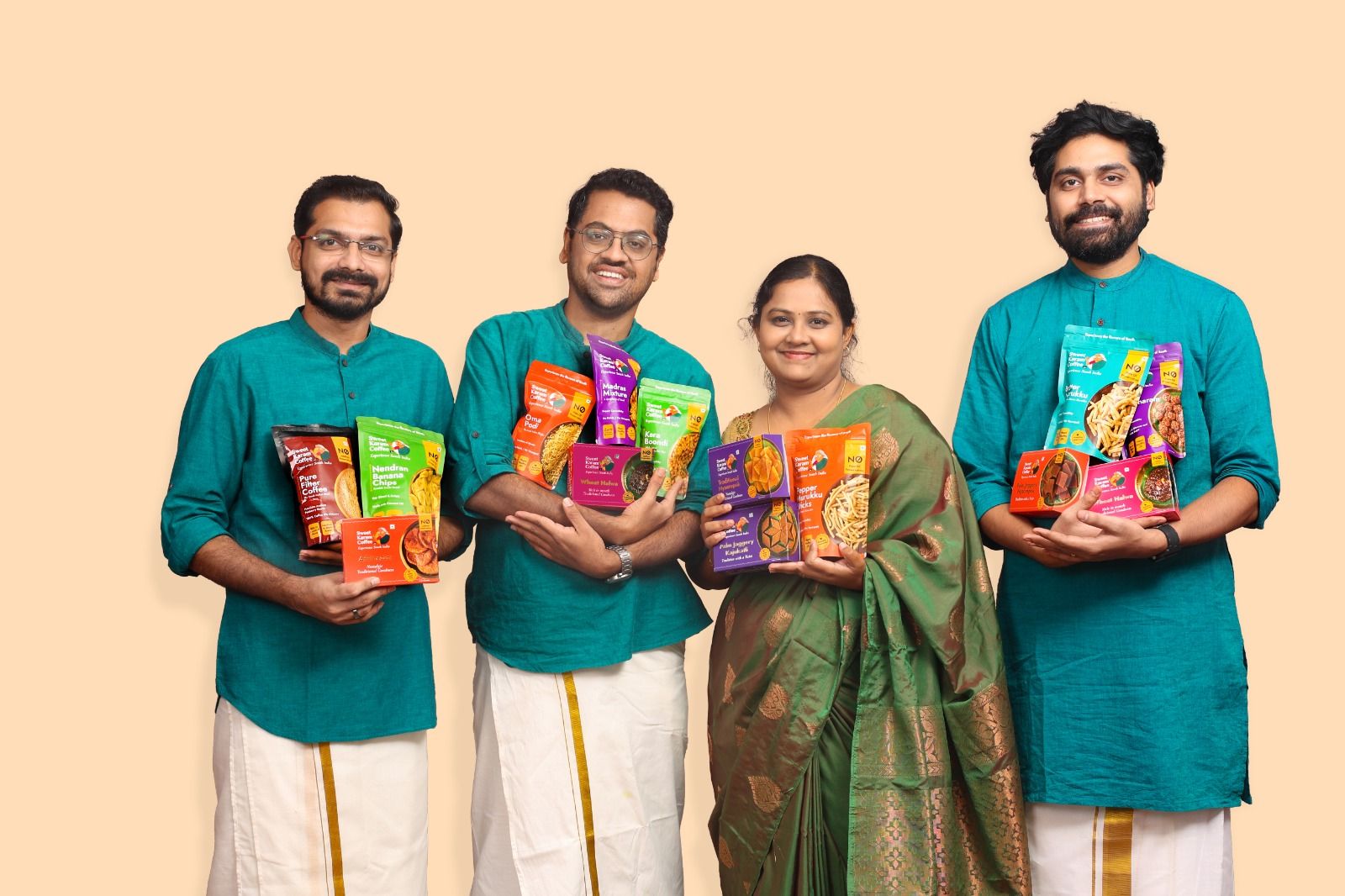
The four co-founders of Sweet Karam Coffee, united by a shared childhood and a common longing for the flavours of home — Nalini Parthiban, Anand Bharadwaj, Srivatsan Sundararaman, and Veera Raghavan.
The Sweet Karam Coffee family — a brand built not on funding rounds and pivot decks, but on the unshakeable belief that food made with love travels furthest.
Leadership Rooted in Discipline, Not Disruption
As Sweet Karam Coffee grew, its leadership style became one of its defining strengths. Nalini Parthiban, the co-founder and CEO, brought a rare balance of emotional clarity and operational rigour. With a background in engineering, banking, and consulting, she was well-versed in structured problem-solving. Yet her approach to the brand remained deeply human. When Nalini joined the business full-time in 2021, Sweet Karam Coffee was already gaining traction. Demand was growing rapidly, especially from customers abroad. The temptation to scale quickly — to automate, centralise, and simplify — was strong. But she resisted it.
Instead, Nalini focused on building systems that could protect the soul of the brand. Quality control was strengthened, supplier relationships were formalised without becoming extractive, and growth targets were set realistically. The aim was not to become the fastest-growing food brand, but the most trusted one. This insistence on sustainability over speed has shaped Sweet Karam Coffee's reputation. In an ecosystem where shortcuts are often celebrated as innovation, the brand's refusal to compromise has become its quiet form of rebellion.
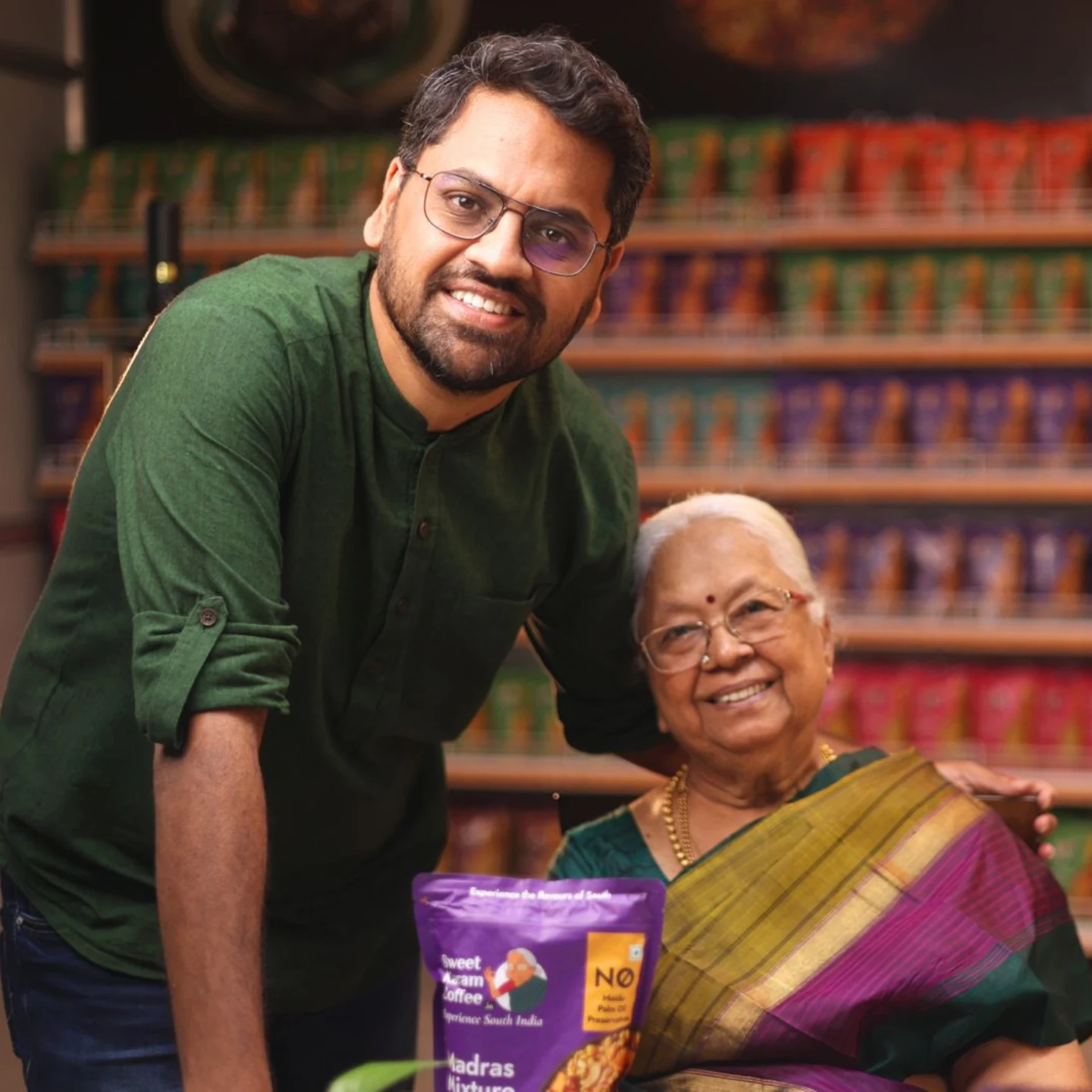
Anand Bharadwaj and Nalini Parthiban, Co-Founders — two of the four cousins who turned a grandmother's kitchen into one of India's most trusted food brands.
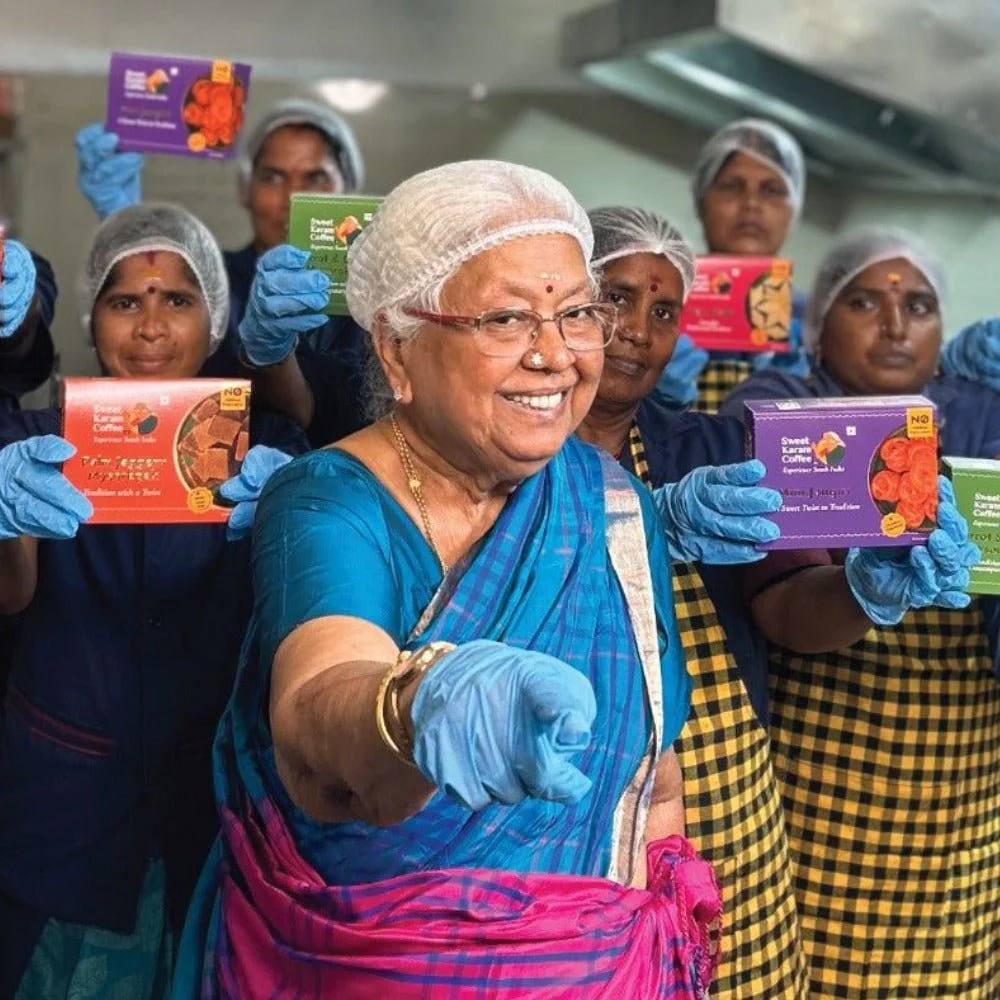
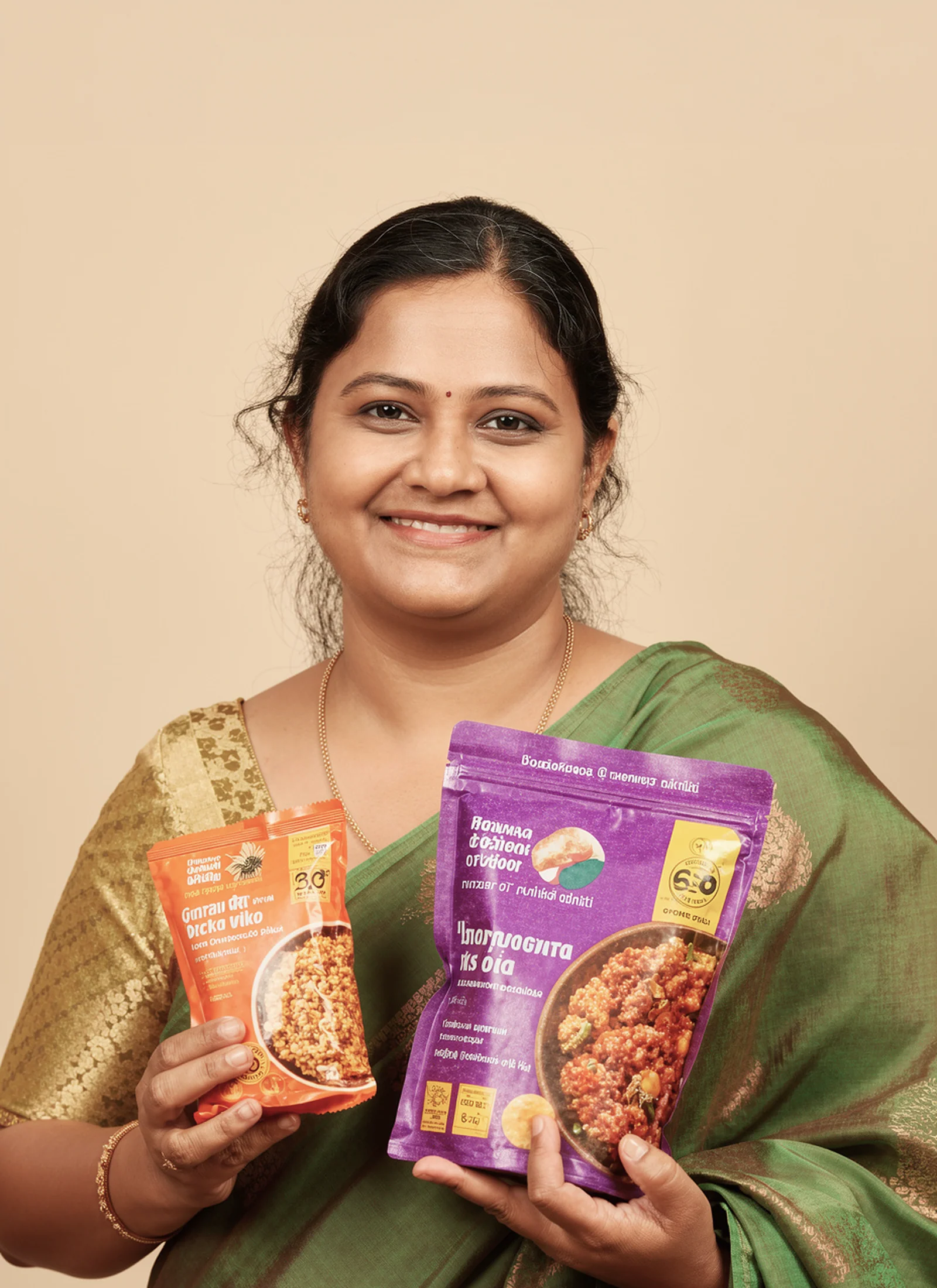
Women at the heart of production — Sweet Karam Coffee's decentralised model provides a market and a livelihood to home cooks who have spent lifetimes perfecting their craft.
The Good Food Revolution and the Politics of Ingredients
Sweet Karam Coffee often describes its philosophy as a Good Food Revolution. Unlike movements driven by health fads or superfoods, this revolution is anchored in simplicity. The brand does not promise weight loss, immunity boosts, or lifestyle transformations. It promises food made the way it always was. Every ingredient choice is intentional. Refined flour is avoided not because it is fashionable to do so, but because it was never a part of traditional home kitchens. Palm oil is excluded because it alters both taste and ethics. Preservatives are avoided even when it complicates logistics.
This commitment comes at a cost. Shelf life is shorter. Production is slower. Margins are tighter. But what the brand gains instead is trust — an increasingly rare currency in the food industry. Sweet Karam Coffee does not market itself as a "healthy" brand. It embraces indulgence without guilt and nourishment without jargon. A ghee Mysore Pak is unapologetically rich. A murukku is crunchy, salty, and comforting. The honesty of this approach has resonated deeply with consumers who are exhausted by performative wellness.
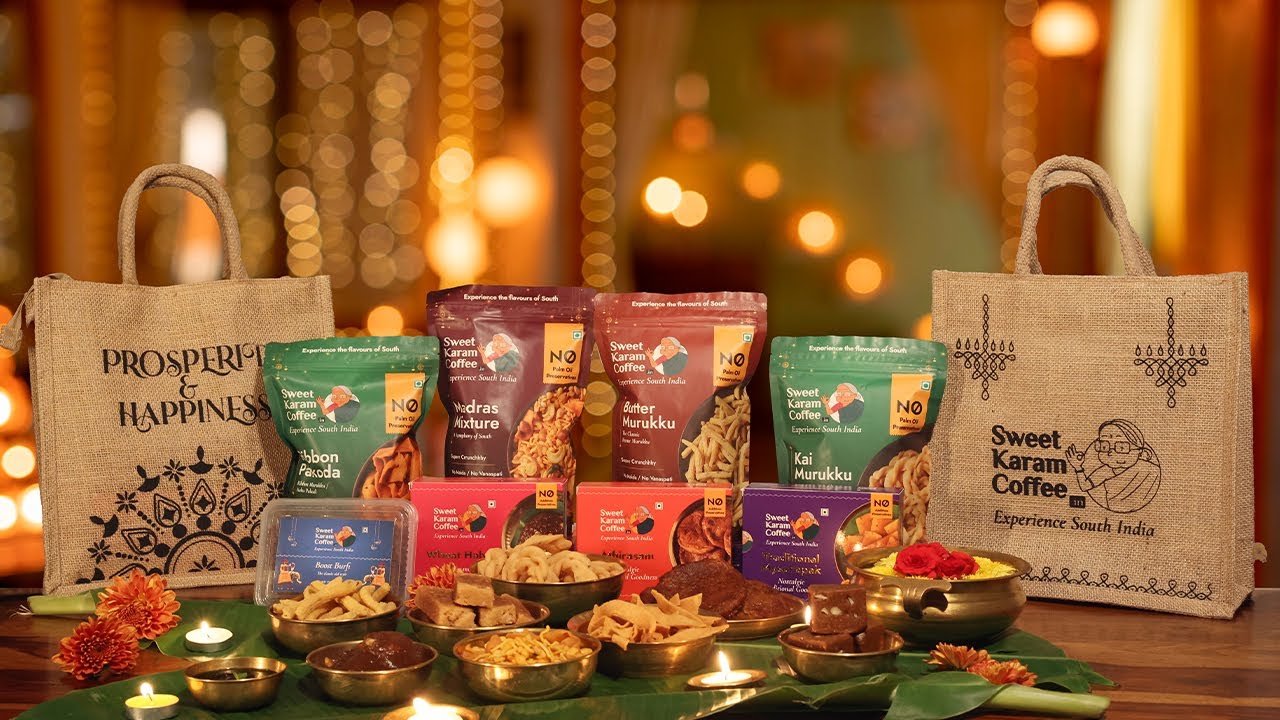
No Palm Oil. No Maida. No Artificial Colours or Flavours. No Preservatives — the Sweet Karam Coffee promise, visible on every packet in a range that now exceeds 100 products.
Decentralised Kitchens, Centralised Values
One of the most distinctive aspects of Sweet Karam Coffee is its production model. Rather than relying on large, centralised factories, the brand works with a decentralised ecosystem of small farmers, regional producers, and home chefs. Many of these collaborators are women who have cooked all their lives but never had access to formal markets. Sweet Karam Coffee provides these partners with recipes, quality benchmarks, packaging standards, and access to a global customer base. What it does not take away is autonomy.
Food continues to be prepared in familiar environments, using traditional tools and methods. This model allows the brand to preserve regional specificity. A murukku made in Tamil Nadu tastes different from one made elsewhere, and that difference is respected rather than erased. At the same time, strict quality checks ensure consistency without uniformity. In doing so, Sweet Karam Coffee has created a system where tradition becomes a source of livelihood, not nostalgia alone. The brand's success is shared, distributed across households and communities rather than concentrated in a single facility.
In a time when algorithms dictate taste, Sweet Karam Coffee's insistence on context — on the story behind each ingredient and each recipe — feels quietly radical.
A Catalogue of Memory: Products That Carry Stories
Over the years, Sweet Karam Coffee has built a catalogue of more than 100 products. Each one is rooted in familiarity. There are ghee-based Mysore Pak varieties that dissolve on the tongue, jaggery-sweetened laddus that recall festival mornings, and athirasam that demands patience and skill to prepare correctly. The savoury offerings are equally evocative — murukku made in coconut oil speaks of regional kitchens and afternoon snacks. The beverage range includes filter coffee blends that honour South India's coffee culture, along with milk mixes inspired by household remedies and rituals. What ties this diverse range together is not novelty, but coherence. Each product feels like it belongs to the same world — a world where food is an extension of care.
Today, Sweet Karam Coffee ships to over 30 countries, reaching customers who may have left India decades ago. For many of them, opening a package from the brand is an emotional experience. It is not uncommon for customers to write back, describing how a particular sweet tasted exactly like something their grandmother used to make.
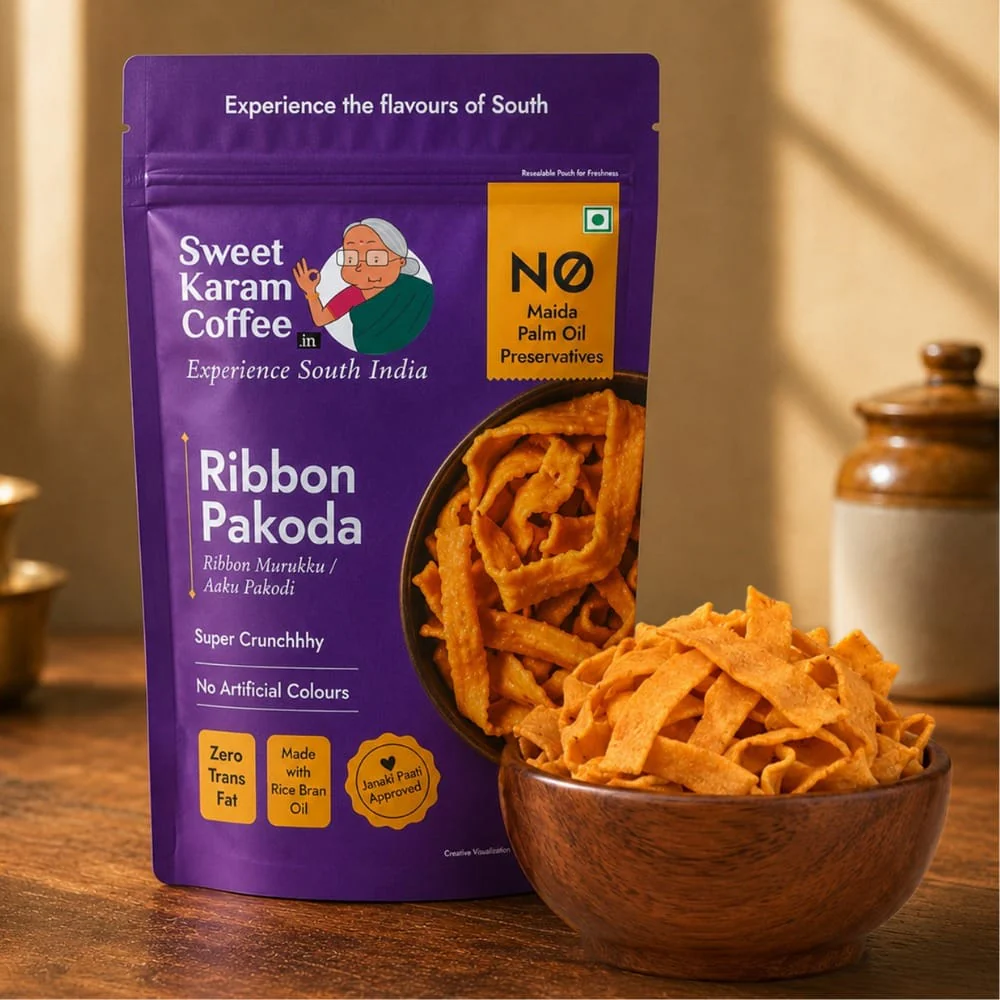
Ribbon Pakoda — Ribbon Murukku / Aaku Pakodi. Super Crrunchhhy. No Maida, No Vanaspati. Each packet a small act of preservation.
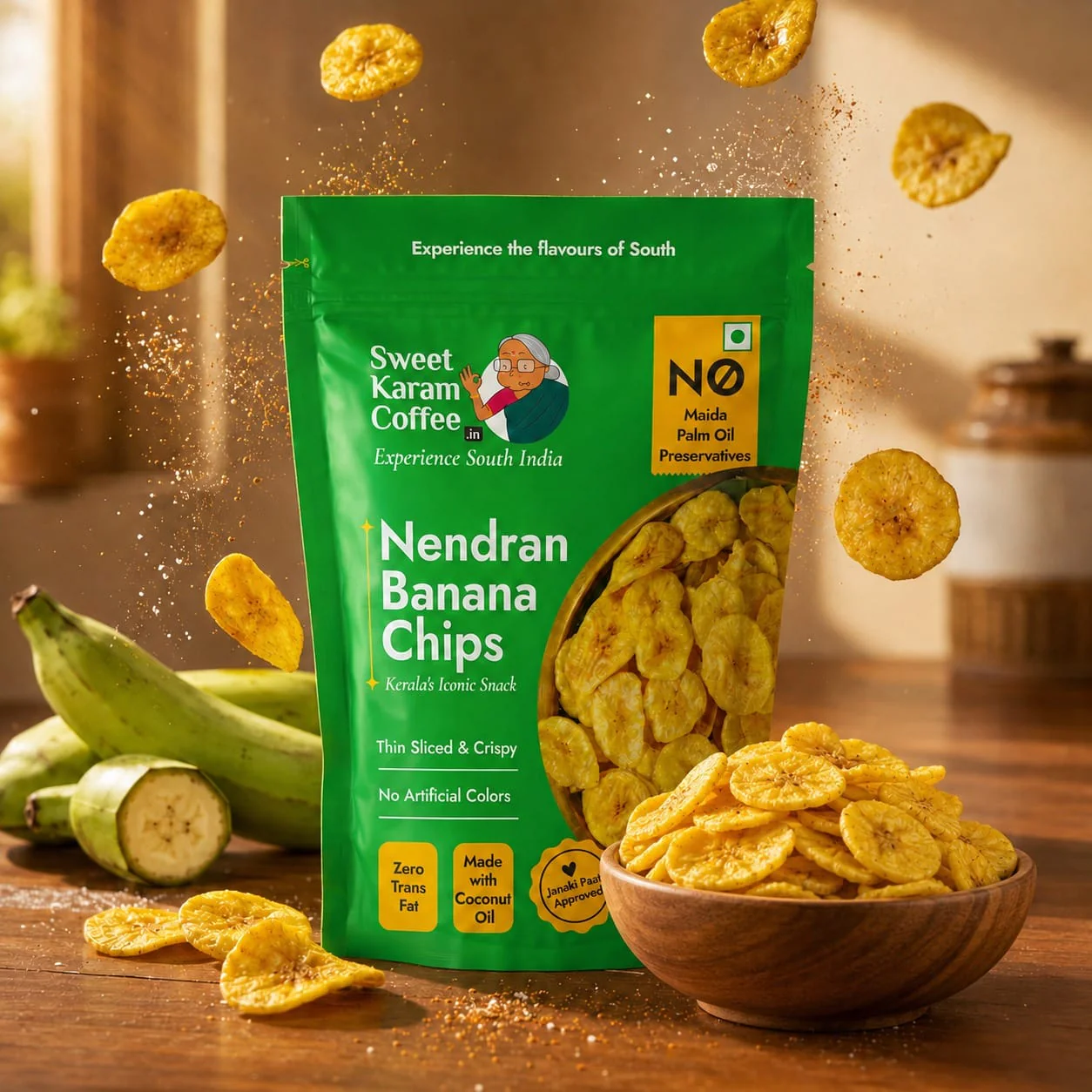
Nendran Banana Chips — Kerala's iconic snack, thin-sliced and crispy, made with coconut oil. Zero Trans Fat. Zero Cholesterol. Grandma Approved.
Nostalgia as a Form of Cultural Preservation
Sweet Karam Coffee understands that nostalgia is not merely sentimental; it is cultural. Through storytelling initiatives such as Dakshin Tales, the brand documents South Indian food traditions, festival practices, and everyday culinary rituals. These stories are shared not as marketing copy, but as archives of lived experience. In doing so, the brand positions food as a language — one that carries history, geography, and identity. It resists the flattening of South Indian cuisine into generic categories, instead highlighting its internal diversity and depth.
This approach has helped Sweet Karam Coffee build a community rather than just a customer base. People do not merely consume the brand's products; they engage with its worldview. The brand's insistence on context — the who, the where, and the why behind each recipe — has turned casual customers into committed advocates. Its social media presence feels less like advertising and more like an ongoing conversation about what South Indian food really means.
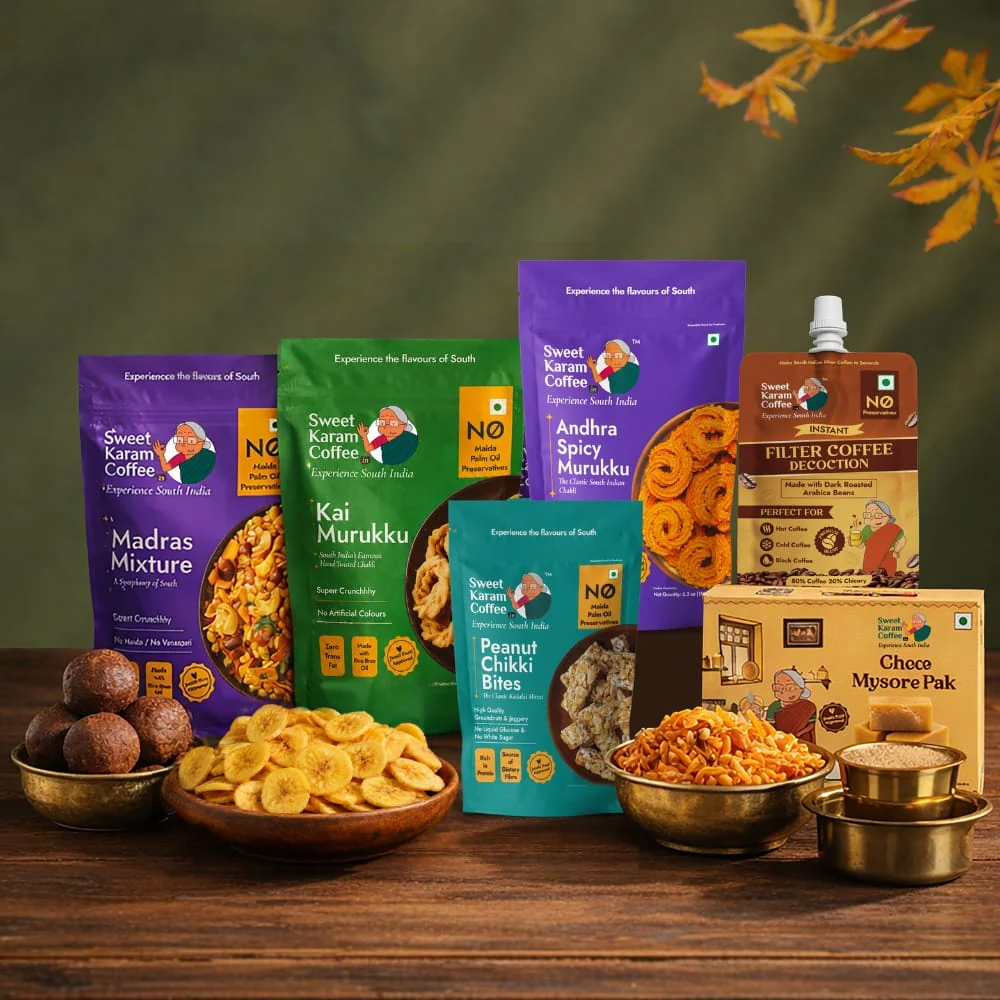
The Sweet Karam Coffee family of products — Wheat Halwa, Ribbon Pakoda, Premium Filter Coffee, Seedai, Spl Madras Mixture, Peanut Chikki Bites — each one a story in a packet.
New Launches — Tradition Meets the Contemporary Kitchen
Sweet Karam Coffee's newest product launches continue to build on its core philosophy: celebrating traditional Indian snacks and drinks while making them suitable for contemporary lifestyles. The latest range reflects a clear shift toward functional foods, clean-label snacks, and ready-to-consume beverage mixes — from a comforting turmeric latte to a crunchy savoury snack to a naturally sweet laddu, all designed to fit seamlessly into everyday routines.
One standout launch is the Golden Milk Mix — also known as turmeric latte — inspired by the age-old Indian practice of haldi doodh. Traditionally associated with immunity, digestion, and overall wellness, it suits modern palates as a bedtime drink or calming mid-day beverage. The Milk Mix Powder reimagines childhood glasses of flavoured milk with natural taste and quality ingredients, free of refined sugar and artificial flavours. The Dates Laddu with choco and dry fruit variants relies on natural sweetness rather than refined sugar, blending the richness of dry fruits with subtle chocolate notes to appeal across generations. And the Peanut Chikki Bites reinterpret a beloved winter classic in bite-sized, neatly packaged form — made using peanuts and jaggery, preserving authentic crunch while offering portion control and convenience.
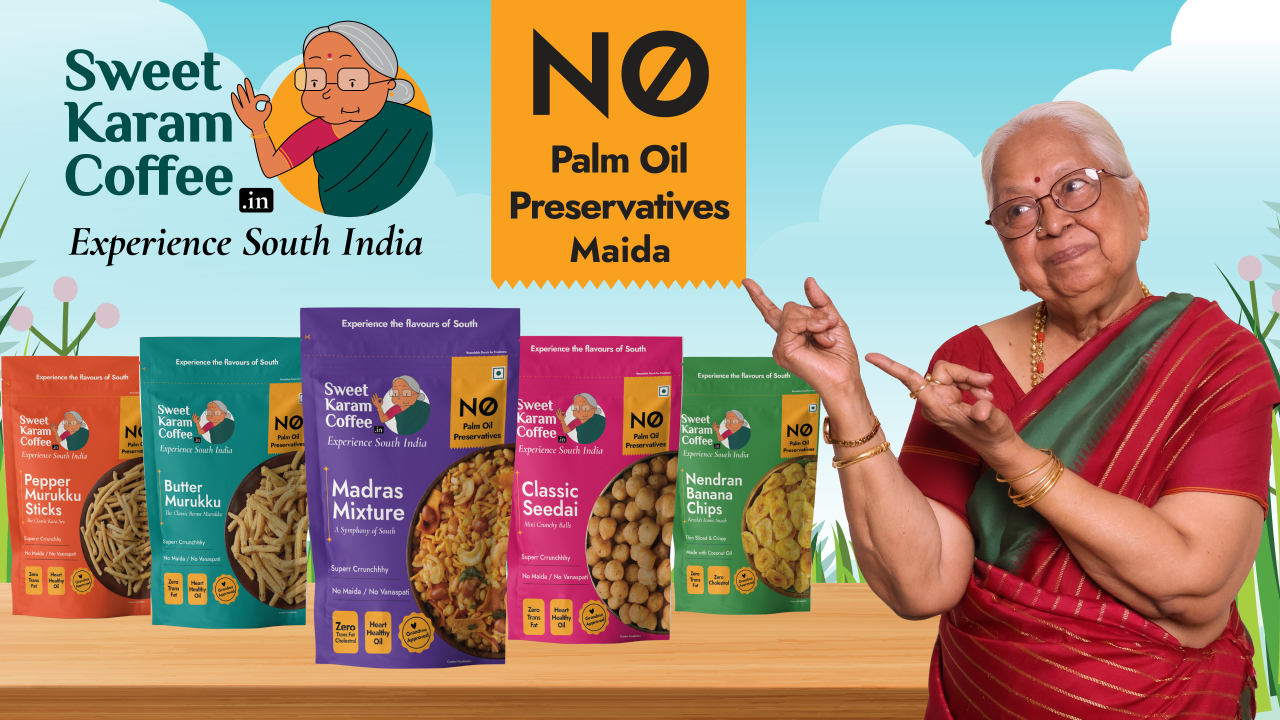
Paati's Favourites — Janaki Paati with the expanded Sweet Karam Coffee range, from Golden Milk Mix and Filter Coffee Decoction to Ragi Hot Chocolate and ABC Milk Mix.
In the savoury category, the Andhra Spicy Murukku draws on the bold spice profiles of Andhra cuisine, delivering an extra kick while retaining the familiar crunch loved across South India. The Andhra Spicy & Garlic Murukku Combo extends the range further, with garlic-infused depth and aroma. The Premium Filter Coffee blend strengthens the brand's association with heritage beverages, reinforcing its roots in South Indian coffee culture. And the Crunchy Party Mixture — a versatile, multi-textured savoury snack for sharing — reflects the brand's understanding of Indian snacking habits, where mixtures are the natural companion to conversation and celebration.
The Art of Gifting — Hampers That Carry Emotion
Beyond its much-loved range of snacks and beverages, Sweet Karam Coffee has created a thoughtful collection of gift hampers that capture the warmth and emotion of Indian gifting traditions. More than assortments of food, each hamper is a carefully curated experience rooted in nostalgia, quality, and heartfelt connection — beautifully packaged boxes that bring together sweets, savouries, and beverages in balanced combinations.
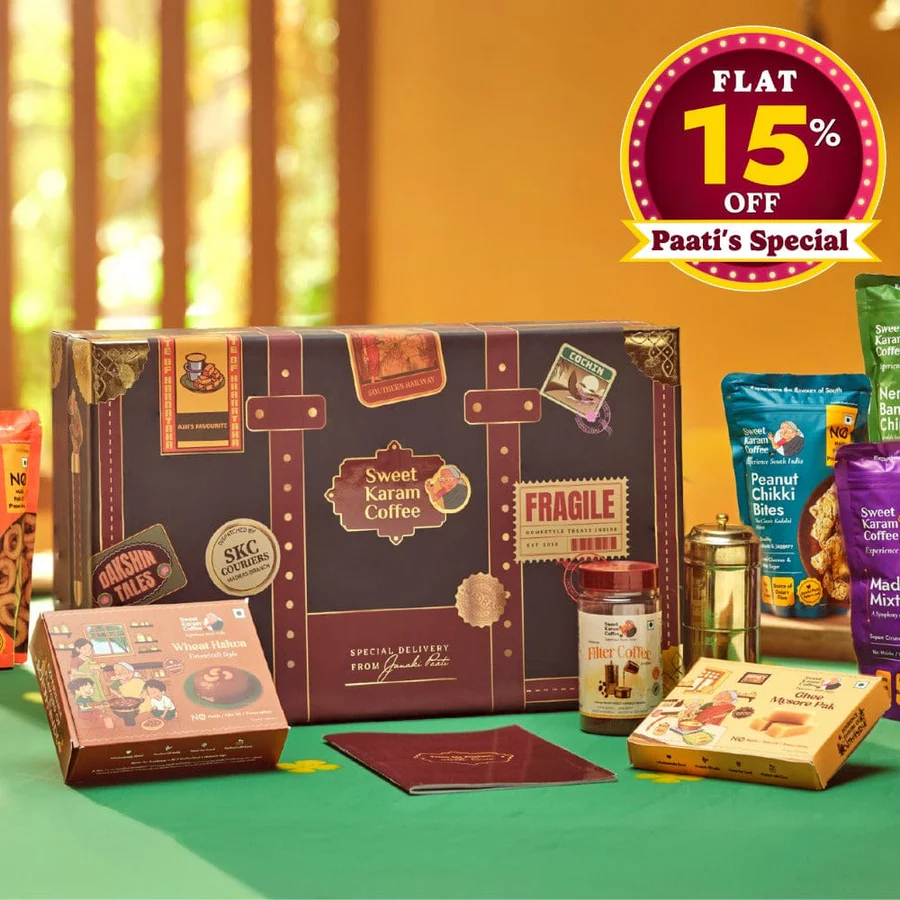
The Sweet Karam Coffee gift hamper — a Dakshin Tales experience packed into a beautifully designed box, carrying the flavours and stories of South India to loved ones everywhere.
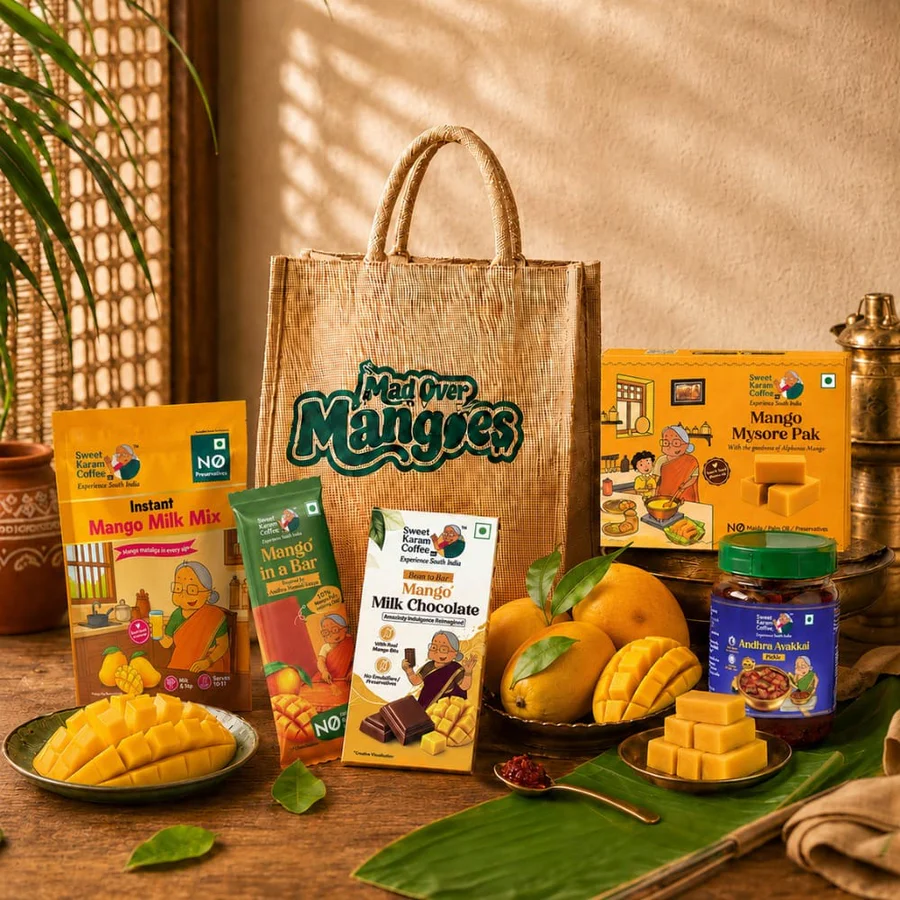
Festive and gifting hampers for every occasion — from Diwali celebrations to corporate gifting, each curated to balance authentic flavour, emotional resonance, and occasion-appropriate joy.
Popular options include the Premium Gift Box for festive celebrations, the Sweet Hamper Box blending sweet and savoury classics, the Classic Traditional Indulgence Gift Hamper with items like Madras Mixture, Ribbon Pakoda, Wheat Halwa, and Ghee Mysorepak made without preservatives, and the Filter Coffee Potli Gift Hamper for coffee enthusiasts. The Paati Gift Hamper taps into nostalgia with grandmother-inspired treats, while the Return Gift Hamper offers a thoughtful budget-friendly option for events. Extending into corporate gifting, these hampers resonate with values of care and gratitude, making them ideal for employees and clients alike.
Growth Without Losing the Plot
As Sweet Karam Coffee expanded, it began to explore offline retail, opening physical stores that extend the brand's philosophy into space. These stores are not designed as flashy outlets but as extensions of the home — warm, familiar, and unhurried. The brand has also raised funding to support its growth, allowing it to strengthen infrastructure, improve logistics, and expand its team. Yet, even with institutional capital, the founders have remained careful about scale. Every decision is weighed against a simple question: does this still feel like home?
This restraint has allowed Sweet Karam Coffee to grow without eroding its essence. It remains a brand that listens closely to its customers, many of whom have been with it since the beginning. In a global food industry increasingly defined by speed, spectacle, and sameness, Sweet Karam Coffee represents a different possibility. It suggests that tradition does not have to be fragile, that home cooking can survive modern logistics, and that growth does not require abandonment of values.
Sweet Karam Coffee is ultimately not just about food. It is about continuity — about ensuring that the knowledge held in kitchens is not lost to time or convenience. In preserving the past, it has found a way to nourish the present.
The brand's success is not loud. It does not rely on celebrity endorsements or viral gimmicks. Instead, it grows through word of mouth, through trust, through the quiet recognition that something made with care feels different. And in a world constantly searching for what is next, Sweet Karam Coffee reminds us that sometimes, what we need most is what we already know — made well, shared generously, and remembered with love.