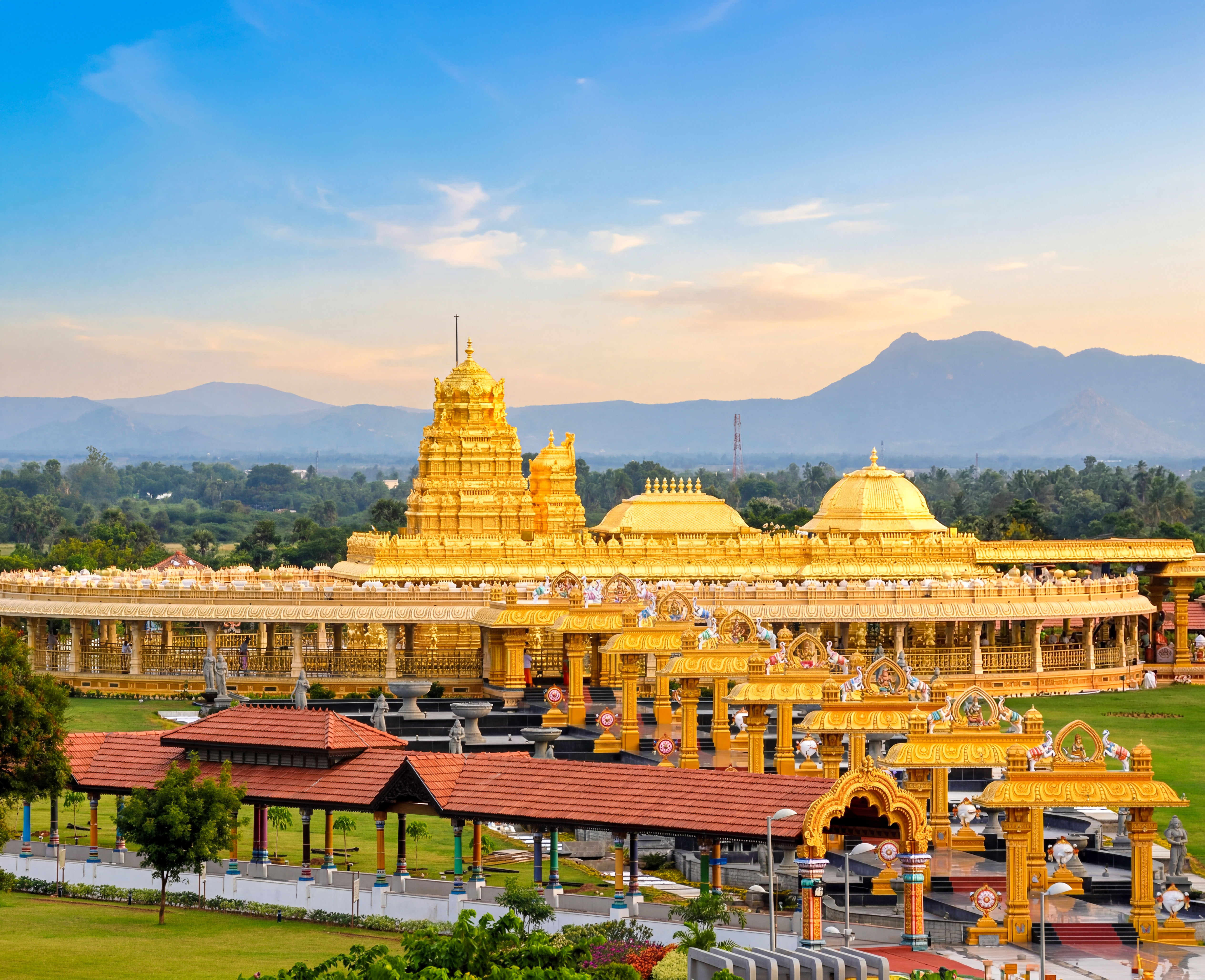
In an era where architectural landmarks are often defined by soaring skyscrapers and futuristic forms, the Sri Lakshmi Narayani Golden Temple stands apart as a remarkable example of how traditional Indian temple architecture can be reimagined on a monumental scale. Located within the vast Sripuram Spiritual Park in Vellore, this extraordinary structure has become one of India’s most celebrated architectural achievements of the 21st century. Constructed over seven years and inaugurated in 2007, the temple seamlessly blends ancient Vedic principles, sacred symbolism, meticulous craftsmanship, and modern engineering into a singular architectural statement.
The Temple of 1,500 Kilograms of Gold
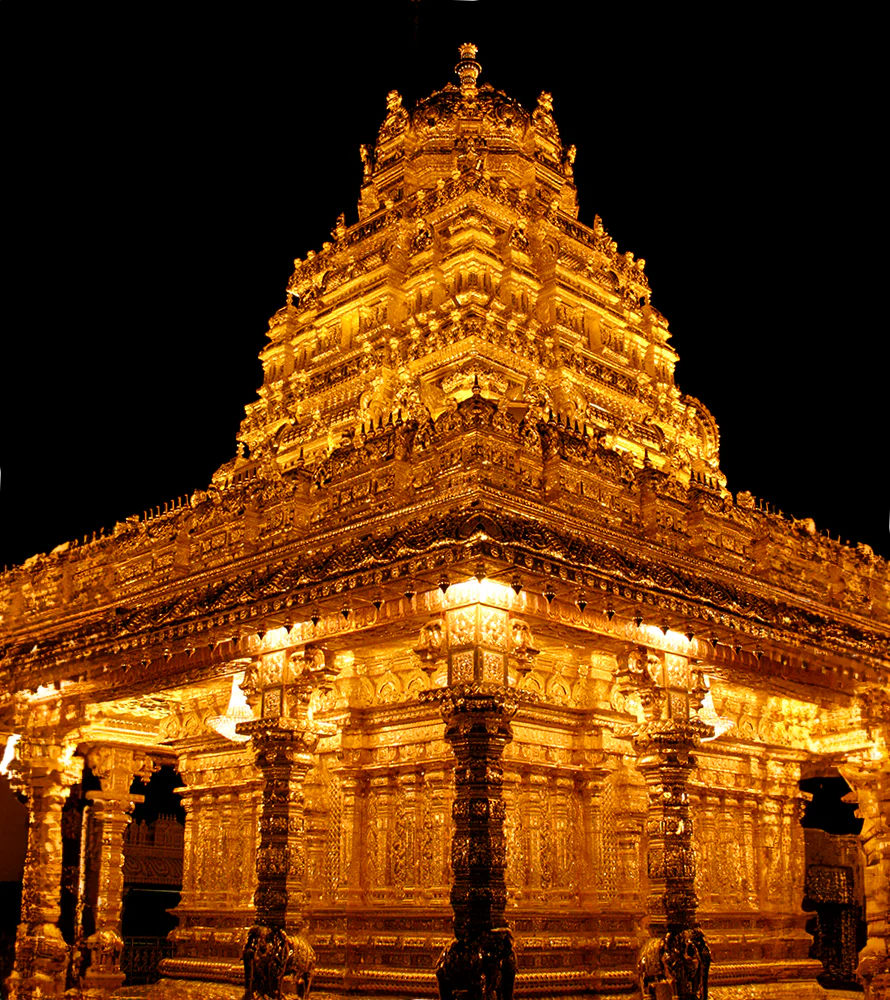
What immediately distinguishes the temple from any other religious monument in India is its spectacular gold-clad architecture. Approximately 1,500 kilograms of gold were used to embellish the temple’s principal structures, making it one of the largest gold-covered temples in the world. The process itself was an engineering and artistic feat. Gold bars were painstakingly transformed into delicate foils and mounted onto intricately etched copper plates by artisans specialising in traditional temple art. Every ornamental detail was crafted by hand, preserving centuries-old techniques while creating a structure of unprecedented scale. Unlike decorative gilding commonly found in temples, the gold work here forms an integral part of the architectural identity. The luminous surfaces interact dynamically with natural light, causing the temple to transform throughout the day—from a radiant golden beacon at sunrise to an ethereal monument glowing against the evening sky.
Sacred Geometry as Architectural Language
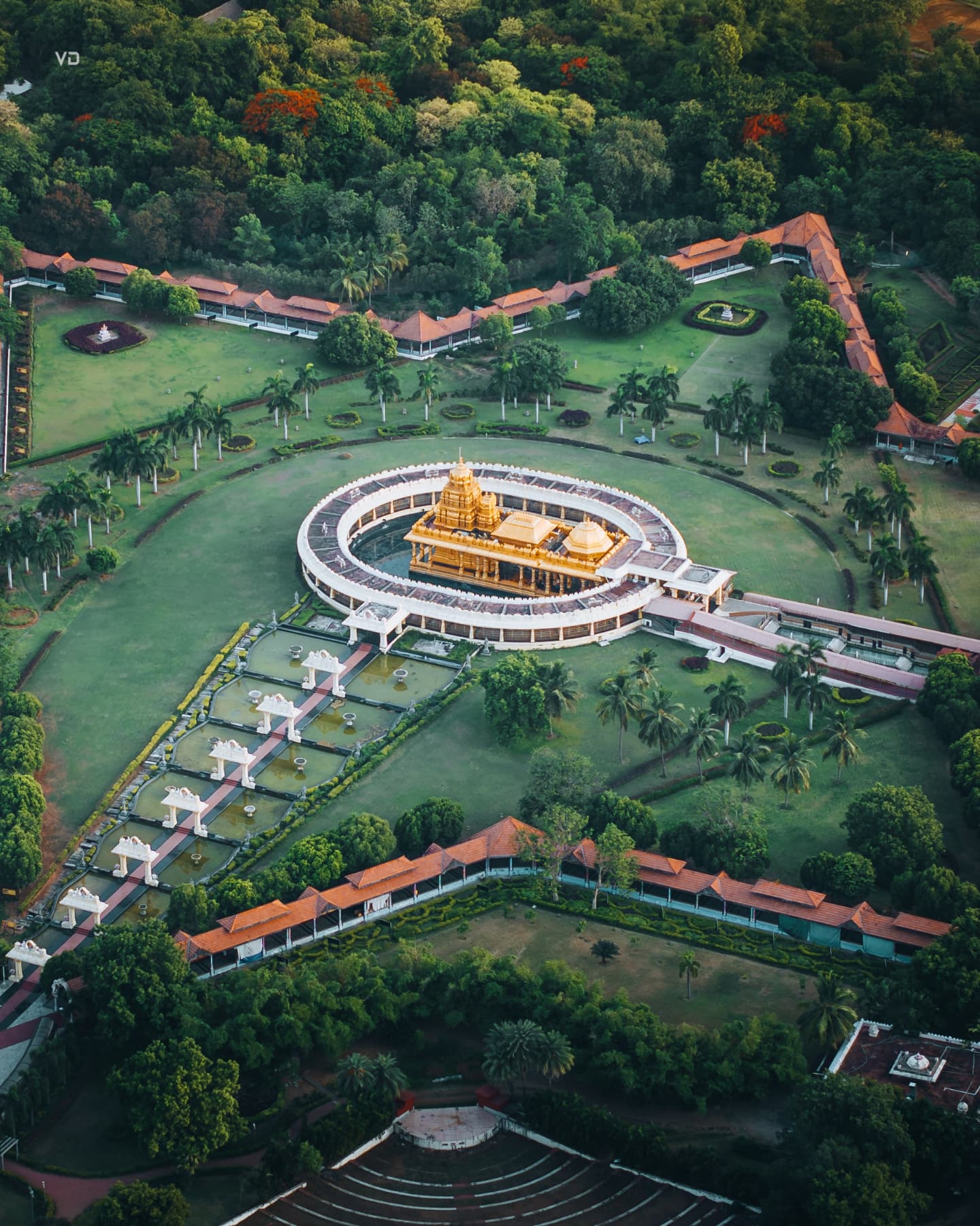
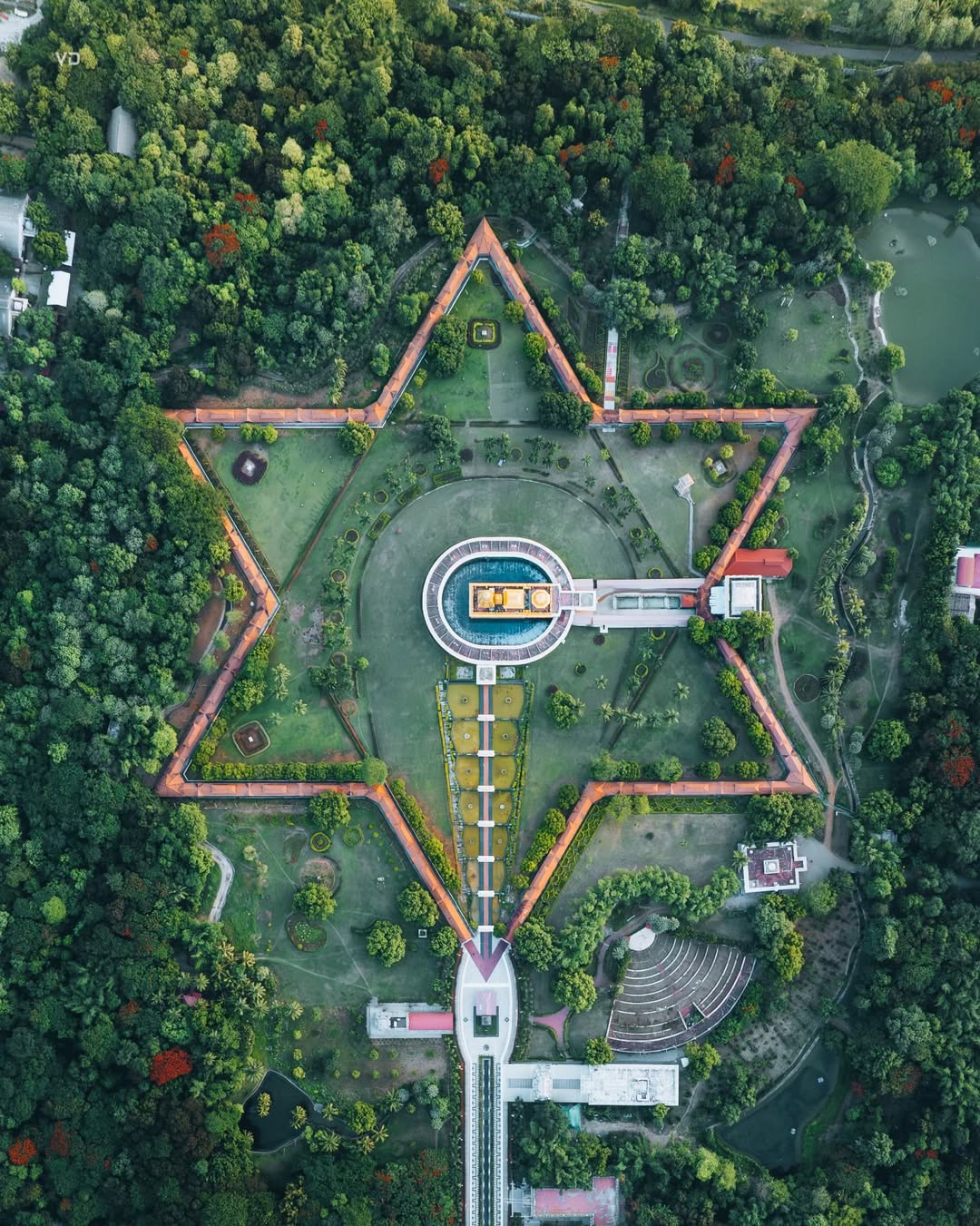
Perhaps the most fascinating aspect of the Golden Temple’s design is its use of sacred geometry. The temple is positioned at the centre of a massive star-shaped layout inspired by the Sri Chakra, one of Hinduism’s most revered spiritual diagrams. This geometric form is not merely decorative; it is deeply embedded in Vedic philosophy and represents the cosmic order of the universe. Visitors cannot approach the temple directly. Instead, they journey along a 1.8-kilometre pathway that traces the Sri Chakra’s intricate form. This carefully orchestrated movement transforms the act of arrival into a spatial and spiritual experience. In architectural terms, it is an ingenious use of procession, where movement through space becomes as significant as the destination itself. The pathway gradually reveals the temple from different perspectives, creating anticipation and heightening the visual impact of the golden structure at its centre.
The Golden Vimanam and Ardha Mandapam
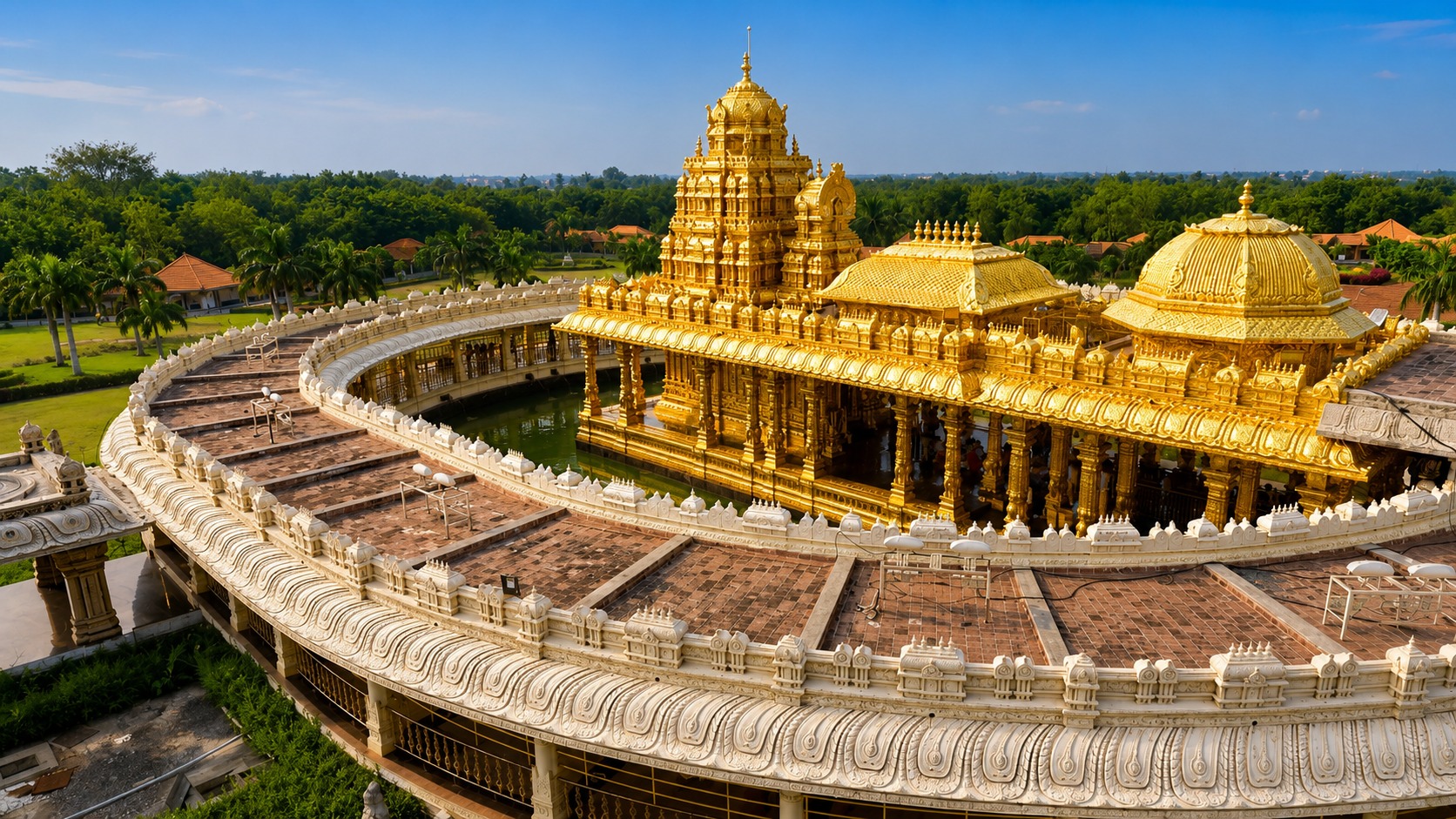
The architectural crown jewels of the complex are undoubtedly the Vimanam and the Ardha Mandapam. The Vimanam, rising above the sanctum sanctorum, serves as the temple’s visual focal point and spiritual axis. Entirely enveloped in gold, it embodies the traditional South Indian concept of a sacred mountain connecting the earthly realm with the divine. Equally magnificent is the Ardha Mandapam, the entrance pavilion that acts as a transitional space between the external world and the sanctum. Both structures showcase an extraordinary level of detailing, with every surface enriched by sculptural ornamentation and symbolic motifs.
The Golden Vimanam and Ardha Mandapam
The interplay between scale, symmetry, and ornamentation demonstrates a sophisticated understanding of classical temple design principles. Despite its contemporary construction, the temple maintains a visual continuity with India’s great architectural traditions.
Craftsmanship Beyond Decoration
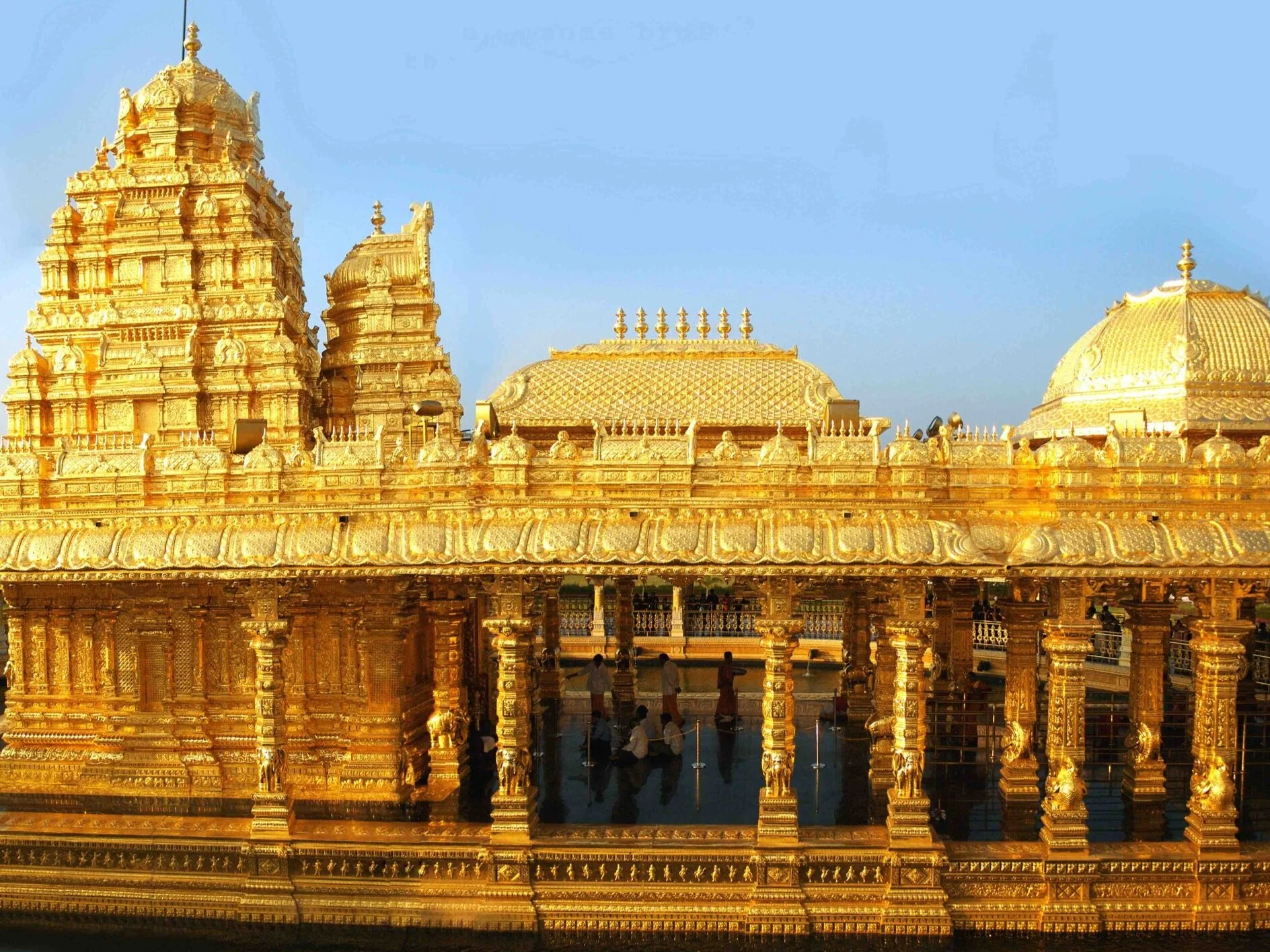
The true architectural significance of the Golden Temple lies not merely in the quantity of gold used but in the craftsmanship that defines every inch of the structure. Floral motifs, mythological narratives, geometric patterns, and sacred symbols have been painstakingly etched into copper and overlaid with multiple layers of gold foil. Each design element draws inspiration from Vedic texts and traditional temple iconography, ensuring that decoration serves both aesthetic and symbolic purposes. This integration of artistry and architecture recalls the great temple-building traditions of South India, where sculpture, symbolism, and structural design are inseparable components of a unified whole.
Craftsmanship Beyond Decoration
Architecture Within a Landscape
Unlike many historic temple complexes that evolved organically over centuries, the Golden Temple was conceived as a complete master-planned environment. Spread across nearly 100 acres, the complex integrates architecture with landscape design in a carefully choreographed manner. Expansive gardens, water features, tree-lined pathways, and open green spaces soften the monumentality of the golden structures and create a tranquil setting for contemplation. The landscape acts as an architectural buffer, allowing the temple to emerge gradually from its surroundings rather than dominating them immediately. This measured reveal enhances the visitor experience and reinforces the temple’s spiritual ambience.
A Modern Landmark Rooted in Tradition
The Sri Lakshmi Narayani Golden Temple occupies a unique position in contemporary Indian architecture. While unmistakably modern in its execution and scale, it remains deeply rooted in traditional principles of Vastu Shastra, sacred geometry, temple iconography, and ritual movement. The project demonstrates that ancient architectural philosophies continue to possess relevance in the modern era when interpreted with imagination and precision.
A Modern Landmark Rooted in Tradition
More than a place of worship, the Golden Temple is a masterclass in experiential design. Every element—from the star-shaped approach and the meticulously crafted gold surfaces to the relationship between architecture and landscape—has been conceived to evoke wonder, reflection, and reverence.
The Golden Legacy of Vellore
Today, the Sri Lakshmi Narayani Golden Temple is regarded as one of Tamil Nadu’s most iconic architectural destinations. Its brilliance lies not only in its glittering exterior but in its ability to transform traditional temple architecture into an immersive contemporary experience. Standing at the intersection of faith, art, engineering, and design, it represents a new chapter in India’s architectural story—one where ancient wisdom continues to inspire modern marvels. The temple’s golden silhouette, rising amidst the verdant landscape of Sripuram, remains a testament to the enduring power of architecture to inspire both the eye and the spirit.
The Golden Legacy of Vellore
The Golden Legacy of Vellore
Visiting the Golden Temple
Situated approximately ten kilometres from Vellore city, the temple is easily accessible from major urban centres in South India. Travellers can reach Vellore via Chennai or Bengaluru and continue by road or rail to Katpadi Junction, the nearest railway station. From there, buses, taxis, and auto-rickshaws provide convenient access to the temple complex. The temple remains open daily for darshan from morning until evening, welcoming devotees and visitors throughout the year. Its well-maintained facilities, organised management, and serene environment ensure a comfortable and enriching experience for all who visit.