The Vision of a Great King
The story of the palace begins with King Thirumalai Nayak, who ruled Madurai from 1623 to 1659. Widely celebrated as one of the greatest rulers of the Nayak dynasty, he envisioned a capital city that reflected power, prosperity, and artistic excellence.
Determined to establish Madurai as one of South India’s most glorious cultural centres, Thirumalai Nayak commissioned the construction of this grand palace as the focal point of his kingdom.
Historical records suggest that the king intended the structure to surpass many contemporary royal residences in magnificence and scale. The palace served both as a royal residence and an administrative centre, symbolizing the authority of the Nayak kingdom.The Nayaks ruled Madurai from the mid-16th century until the 18th century, leaving behind a lasting architectural legacy through temples, mandapams, and palatial structures that still define the city’s cultural identity.
A Spectacular Blend of Architectural Styles
One of the most fascinating aspects of the Thirumalai Nayakkar Mahal is its unique architectural style. The palace is often described as a remarkable fusion of Dravidian and Indo-Islamic influences, while several historians classify it as a late Vijayanagara architectural masterpiece adapted to the Nayaka style of Tamil Nadu.Local legends also suggest that an Italian architect may have assisted in designing the palace, leading some to describe the monument as an example of Dravidian–European architectural synthesis. Although historians continue to debate this theory, the structure undeniably showcases influences that go beyond traditional Tamil architecture.
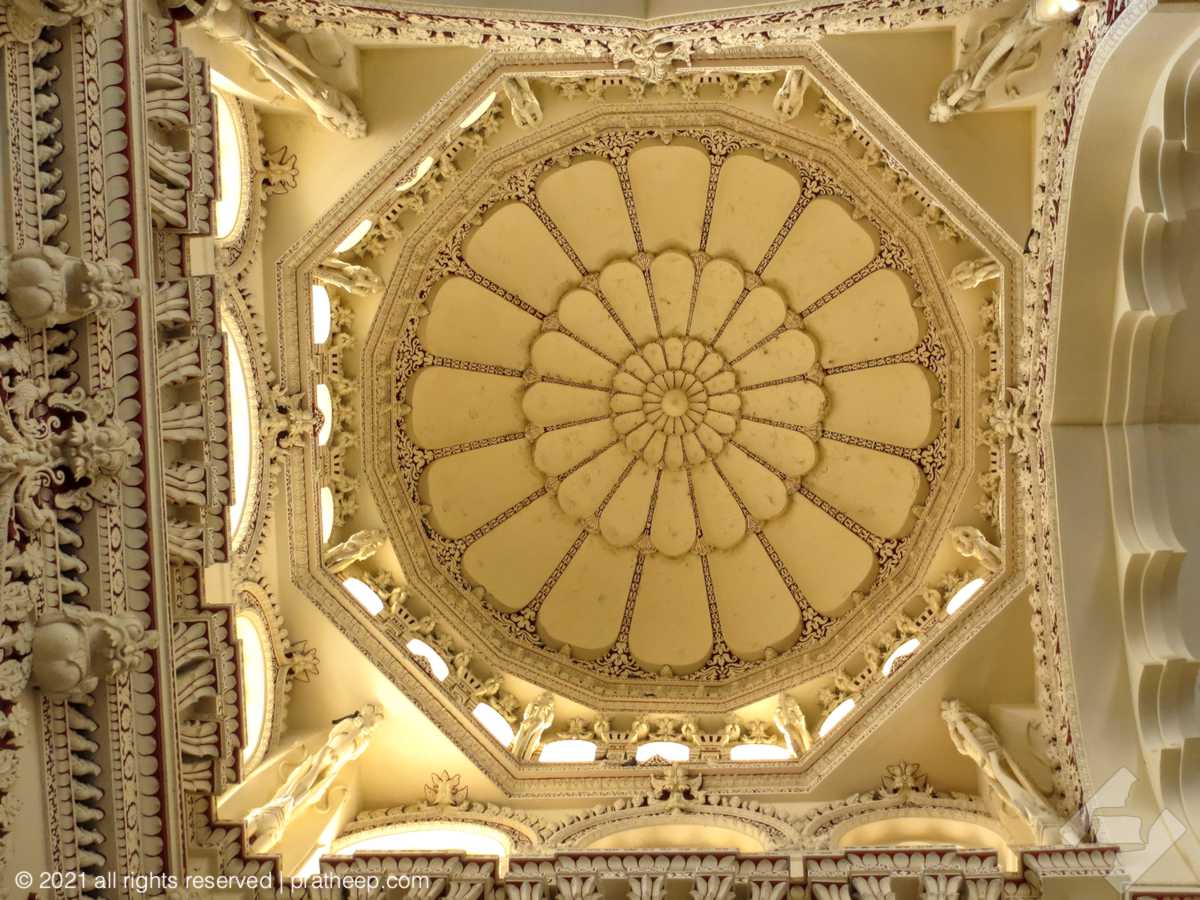
The intricately stuccoed dome of the Swarga Vilasam
The palace captivates visitors with its enormous arches, sweeping corridors, and ornamental domes. Unlike many traditional South Indian palaces, which emphasize intricate exteriors, Thirumalai Nayakkar Mahal surprises visitors with a comparatively restrained outer appearance while revealing an astonishingly elaborate interior.The harmony of scale, symmetry, and ornamentation creates a dramatic visual effect that makes the monument unlike any other heritage structure in Tamil Nadu.
The Majestic Pillars & Grand Courtyard
Perhaps the most iconic feature of the palace is its gigantic circular pillars. Rising to nearly 82 feet in height and spanning an impressive width, these colossal columns dominate the palace space with extraordinary grandeur. Their sheer scale alone is enough to leave visitors spellbound.Upon entering the palace gates, visitors are welcomed into a vast central courtyard surrounded by these towering pillars and decorated with elegant arches. The courtyard once functioned as an important gathering space for royal events, celebrations, and ceremonies.The combination of vast open spaces and monumental pillars creates a feeling of magnificence rarely found in surviving palace architecture from this era. Even after centuries of wear, the palace continues to radiate a sense of regal authority and timeless beauty.
Inside the Palace
Swarga Vilasam & Ranga Vilasam
The original palace complex was divided into two principal sections—Swarga Vilasam and Ranga Vilasam, each serving different royal purposes.Swarga Vilasam, meaning “Celestial Pavilion,” functioned as the royal throne room. This section stands as one of the grandest surviving areas of the palace, featuring a towering dome supported by massive pillars connected through beautifully scalloped arches. Here, the king held court, received dignitaries, and presided over important state affairs.Ranga Vilasam, on the other hand, housed the king’s residential quarters and other royal spaces, including theatres, shrines, armories, ponds, gardens, and entertainment halls.
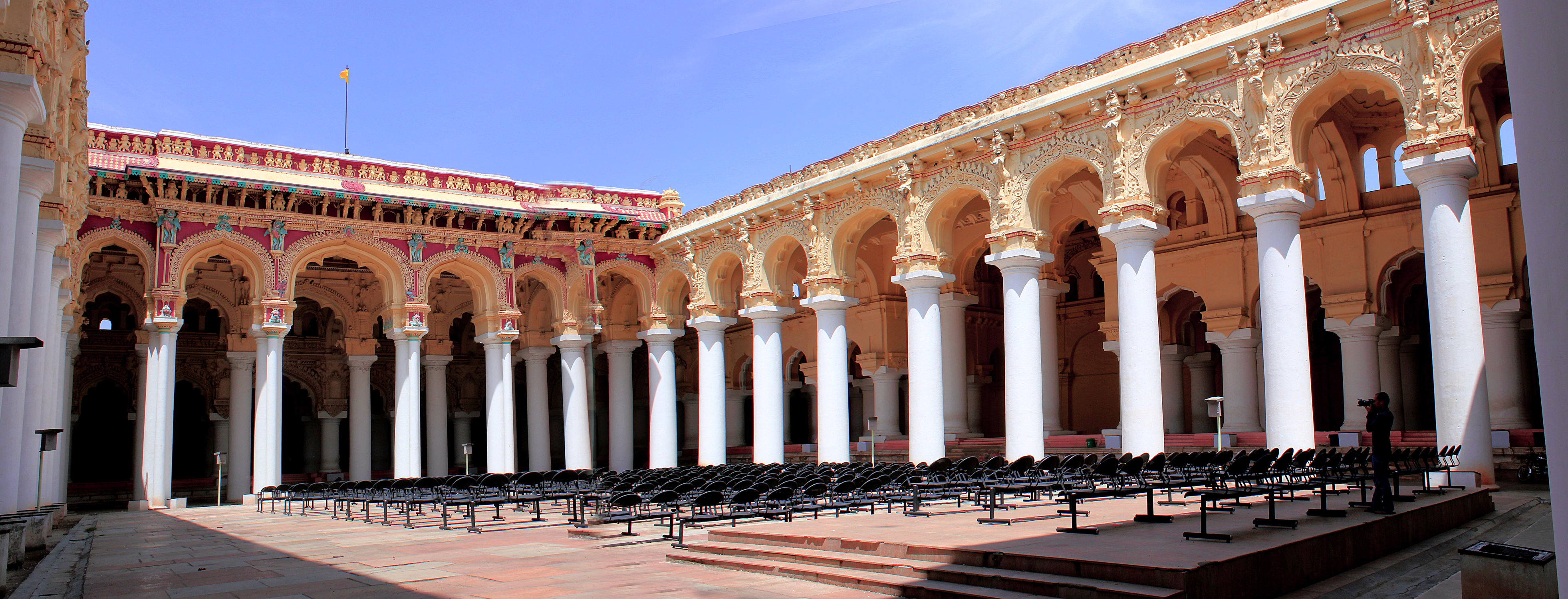
The vast pillared courtyard, the Swarga Vilasam
Among the most admired sections today is the famous dancing hall, where performances and royal cultural gatherings were once held. Visitors can still imagine the grandeur of musicians, dancers, and royal guests who once animated these magnificent spaces.The decorated throne associated with the Nayak rulers remains one of the treasured attractions of the palace, offering a glimpse into the lifestyle of Madurai’s royal past.
Craftsmanship Beyond Imagination
The artistic details of the palace reveal an extraordinary level of craftsmanship. The ceilings feature elegant paintings and ornamental detailing that continue to impress visitors despite centuries of damage and restoration.The structure was built using foliated brickwork and finished with a special form of polished stucco known as chunam. This material, prepared using shell lime mixed with egg white, created a smooth, glossy surface that added elegance and durability to the monument.The arches, decorative mouldings, and finely crafted surfaces demonstrate the exceptional skill of artisans employed during the Nayak era. Gold-topped finials, sculpted embellishments, and ornamental galleries once enhanced the palace’s grandeur, making it one of the most visually striking royal complexes in South India.
A Palace That Survived Destruction
Though magnificent today, the palace is only a shadow of its former self.Historical records suggest that the original palace was nearly four times larger than the surviving structure, covering an enormous area of more than 550,000 square feet. However, centuries of war, neglect, and demolition severely damaged the monument.British-era accounts mention that King Thirumalai Nayak’s grandson dismantled sections of the palace to obtain building materials for constructing another royal residence in Tiruchirappalli. However, some historians dispute this claim, arguing that local scavenging and colonial neglect played a more significant role in its destruction.During the colonial period, the palace served multiple functions, including granaries, military barracks, warehouses, and even paper and weaving factories. It later functioned as a district court until 1970, altering much of its royal identity.
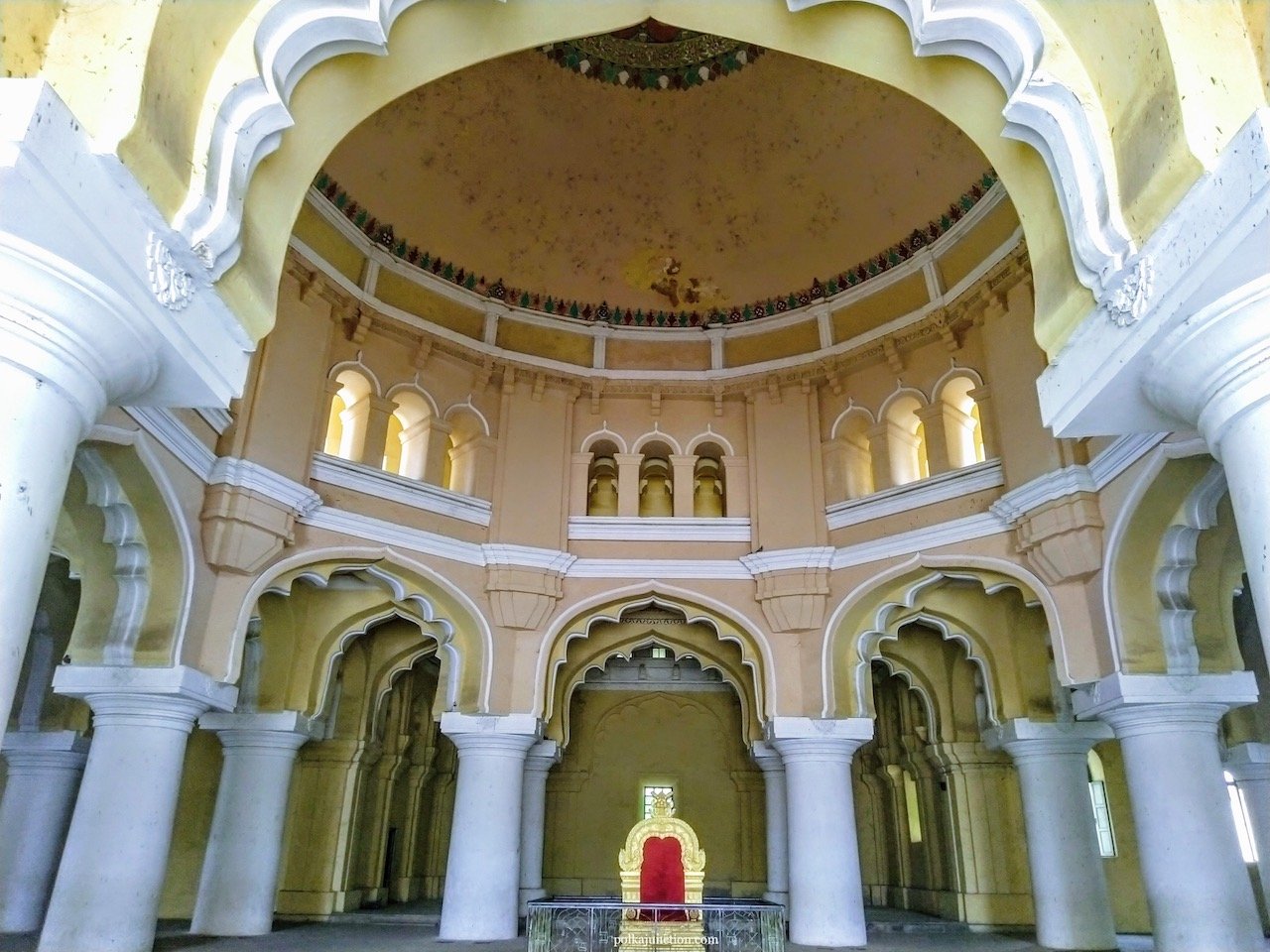
The soaring dome above the throne pavilion
Despite these challenges, the palace endured.
Revival Through Restoration
The preservation of the Thirumalai Nayakkar Mahal owes much to restoration efforts initiated during British rule. Governor Lord Napier undertook significant renovation works between 1866 and 1872, preventing the monument from disappearing entirely.In recent years, large-scale restoration projects have revived the palace further, focusing on structural strengthening, flooring improvements, conservation of sculptures, and better visitor facilities. Traditional methods have reportedly been prioritized to maintain historical authenticity. Renovation work that began in the early 2020s has significantly improved the palace’s appearance and accessibility.Today, the palace remains protected as a national monument under archaeological conservation authorities, ensuring its preservation for future generations.
The Enchanting Light & Sound Experience
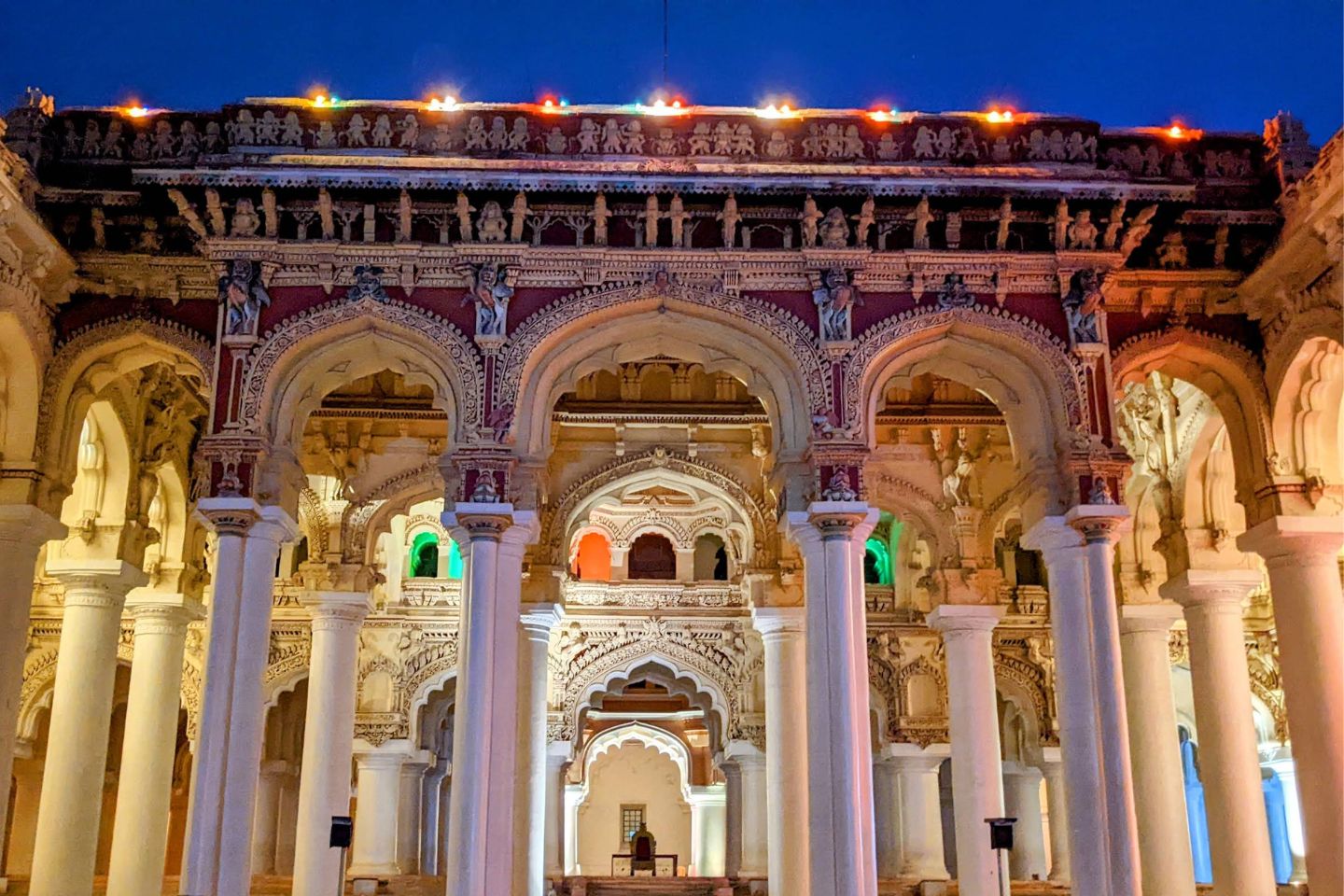
As evening falls, the palace transforms into a stage for one of Madurai’s most captivating cultural experiences—the famed light and sound show.Narrating stories from the Tamil epic Silappathikaram and the history of the Nayak dynasty, the show blends narration, lighting, and music to recreate the spirit of Madurai’s royal era. For many visitors, this immersive experience adds an emotional dimension to the historical visit. Recent upgrades have introduced modern projection technologies to make the storytelling even more engaging.The illuminated arches and glowing pillars during the performance create an atmosphere of timeless wonder, making it one of the most memorable heritage experiences in Tamil Nadu.
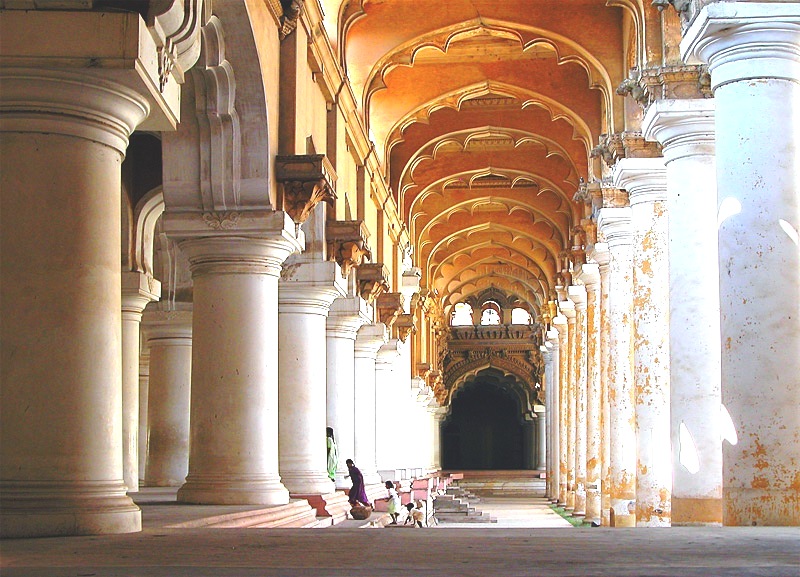
A colonnade of towering granite pillars
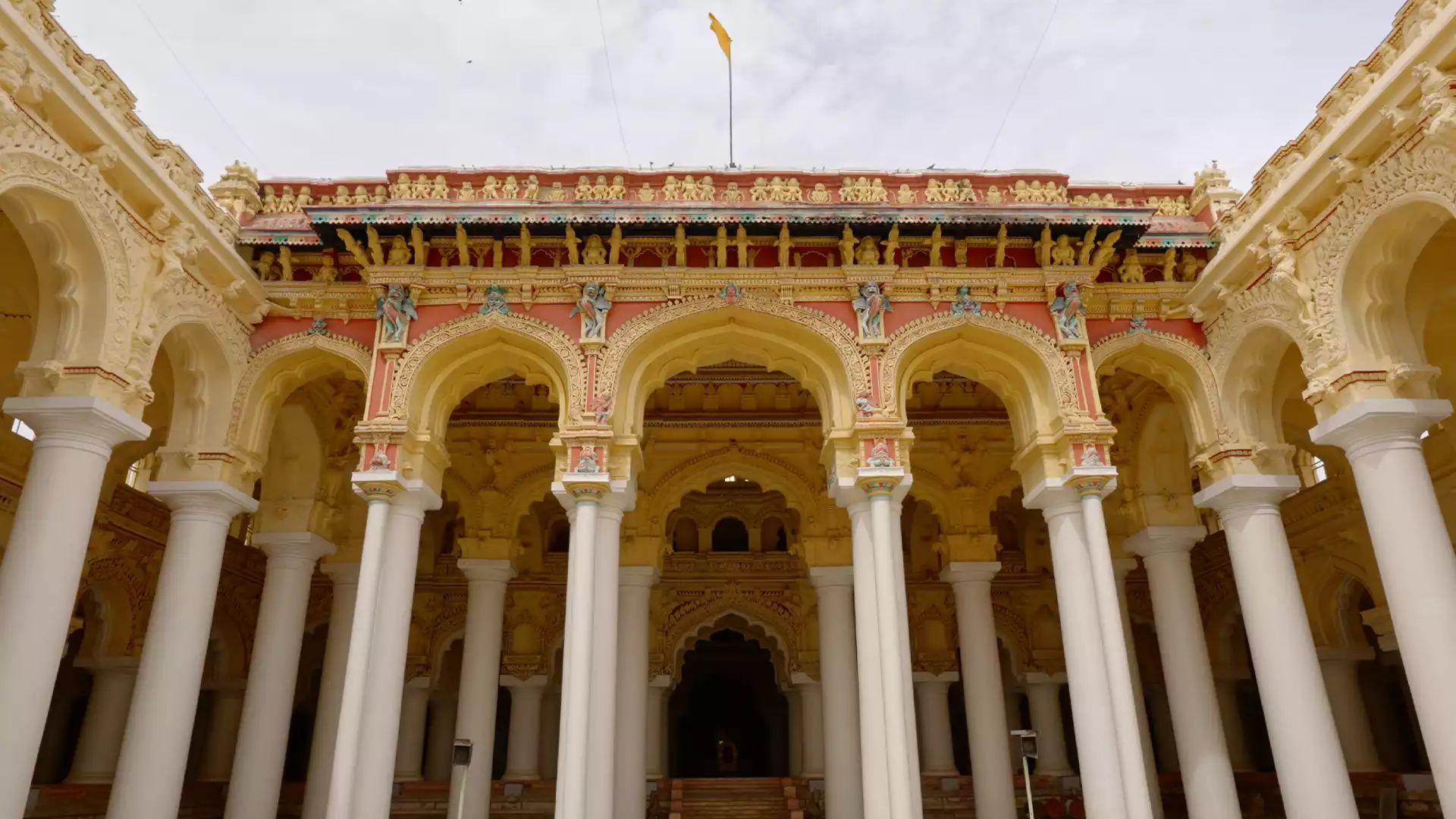
The palace facade, ringed by its famous columns
A Favourite Destination for Cinema
The palace’s visual grandeur has also made it a sought-after filming location for Indian cinema. Several notable films, including Bombay, Guru, and Bheema, have used the palace as a backdrop, adding to its popularity among movie lovers.Its dramatic pillars, regal halls, and historical ambience lend themselves perfectly to cinematic storytelling, making the monument instantly recognizable to generations of film audiences.
A Living Legacy of Madurai
Thirumalai Nayakkar Mahal is more than a tourist attraction—it is a living reminder of Madurai’s royal heritage and architectural brilliance. Though only fragments of its original magnificence survive, the palace continues to inspire admiration through its scale, craftsmanship, and enduring historical significance.Nearly 400 years after its completion, this monumental structure still stands as a tribute to the ambition and artistic vision of King Thirumalai Nayak. Walking through its majestic halls today is like stepping into the pages of history, where echoes of royal ceremonies, music, and grandeur continue to linger.For anyone visiting Madurai, the Thirumalai Nayakkar Mahal is not merely a place to see—it is a story to experience.